.svg)


Why is Project Management Important? Top 12 Reasons & Tips
Discover Why is Project Management Important with 12 reasons and practical tips to improve planning, communication, teamwork, and successful project delivery. Effective Project Management enables businesses to deliver projects on time, control costs, reduce risks, and achieve organisational goals with greater efficiency and success.


Maria Thompson
Have you ever wondered why some projects run smoothly while others face delays, confusion, and rising costs? The difference lies in how effectively the work is planned and managed. Understanding Why is Project Management Important helps organisations organise tasks, manage resources, and keep teams focused on clear goals. When projects follow a structured approach, team's complete tasks, control risks, understand their roles, and deliver business results efficiently.
As organisations take on larger and more complex initiatives, recognising Why is Project Management Important becomes even more valuable. It helps businesses prioritise the right tasks, use resources wisely, and maintain steady progress throughout a project. In this blog, you will explore the key reasons Project Management is essential and practical tips that help teams and businesses deliver successful project results.
Why Project Management is Important?
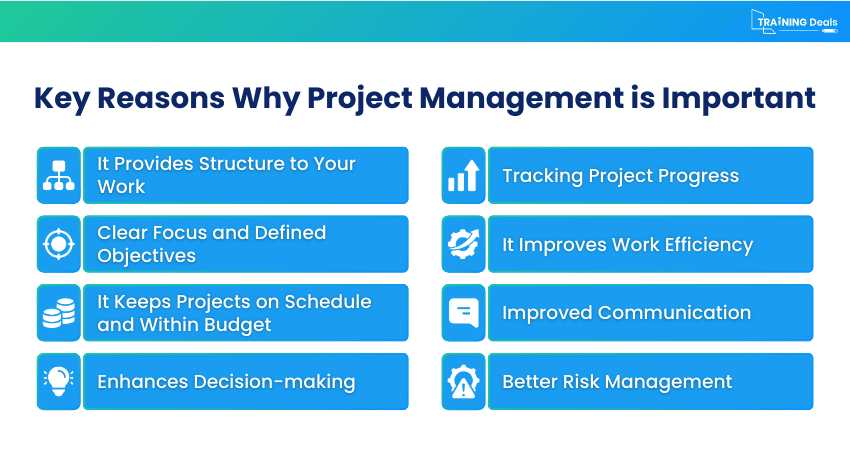
Project Management plays a critical role in helping organisations plan, organise, and successfully deliver projects. It provides a structured approach that improves efficiency, communication, and decision-making across teams. Let’s look at 12 key reasons that explain Why Project Management is Important:
1) It Provides Structure to Your Work
Project Management provides a clear structure for work to be planned, executed, and completed. Projects are divided into defined phases, such as initiating, planning, executing, monitoring, and closing. This structured approach helps organisations organise tasks logically and ensure that work progresses systematically.
With this structure in place, teams gain a clear roadmap to follow throughout the project lifecycle. Roles, timelines, and deliverables become well defined, which reduces confusion and duplication of effort. This helps projects move forward with greater clarity, consistency, and efficiency.

2) Clear Focus and Defined Objectives
A well-managed project begins with a clearly defined focus and objectives. Project Management ensures that the team understands the purpose of the project, the desired outcomes, and the key business objectives that must be achieved. This clarity helps team members align towards a shared goal.
When project goals are clearly communicated, teams can prioritise tasks effectively and avoid unnecessary work or rework. Additionally, defined objectives allow organisations to measure progress and evaluate whether the project is delivering the intended value.
3) It Keeps Projects on Schedule and Within Budget
Managing time and costs is a critical part of successful and effective project delivery. Project Management helps organisations create realistic timelines, allocate resources wisely, and track progress throughout the project lifecycle. These practices ensure that projects remain aligned with their planned schedules.
Budget management is equally important since by monitoring expenses and tracking resource usage, Project Managers can proactively identify cost overruns and take mitigation action. This helps businesses complete projects without exceeding the set financial limits.
4) Enhances Decision-making
Project Management provides leaders with accurate and reliable information about project performance, progress, and risks. By monitoring milestones and tracking Key Performance Indicators (KPIs), Project Managers create valuable insights that support informed decision-making.
Also, access to reliable data enables organisations to respond quickly when unexpected challenges arise. Instead of relying on assumptions, leaders and senior management can evaluate real project information and choose the best course of action to keep the project on track.
5) Tracking Project Progress
Continuous monitoring plays an important role in ensuring that projects move forward according to the planned schedule. Project Management involves regular status updates, performance tracking, and progress reviews to evaluate how work is advancing. This visibility helps teams identify potential delays early and take corrective action to keep the project on track.
These updates provide visibility into completed tasks and upcoming activities. This ensures that when deviations from the plan occur, Project Managers can proactively identify issues and implement corrective measures to maintain project momentum.
6) It Improves Work Efficiency
Project Management improves efficiency by organising tasks and assigning work based on team member’s skills and availability. By distributing responsibilities clearly, organisations ensure that employees focus on tasks that match their expertise. This helps reduce delays, improve productivity, and ensure that project tasks are completed more effectively.
This approach prevents situations where some team members become overloaded while others remain underutilised. Balanced workloads help teams maintain productivity and contribute more effectively to project outcomes.
7) Improved Communication
Effective communication is essential for successful project delivery. Project Management establishes clear communication channels between team members, managers, and stakeholders to ensure that everyone remains informed about project developments. This reduces misunderstandings, keeps teams aligned, and ensures that important updates are shared.
Regular meetings, reports, and updates help maintain transparency throughout the project lifecycle. This consistent communication reduces misunderstandings and ensures that issues are addressed promptly and clearly.
8) Better Risk Management
Every project involves potential uncertainties and challenges. Project Management includes identifying possible risks early in the project and developing contingency strategies to manage them effectively. This preparation is essential to maintain steady progress throughout the project.
By analysing risks and preparing contingency plans, organisations can reduce disruptions and maintain project stability. This proactive approach improves the chances of delivering the project successfully.
Learn how to become a confident project leader with PRINCE2® Foundation and Practitioner Training – Sign up now!
9) Encourages Innovation and Ongoing Improvement
Project Management encourages teams to review their performance and identify areas for improvement. By analysing project outcomes and lessons learned, organisations can refine their processes and adopt better practices for future initiatives. This continuous improvement helps teams deliver stronger results in the future.
This continuous learning environment supports innovation and helps teams adapt to changing business needs. Over time, organisations become more efficient and capable of delivering higher-quality projects consistently.
10) It Promotes Greater Accountability
Accountability is an important element of effective Project Management. Clearly defined roles and responsibilities ensure that every team member understands what they are expected to deliver. This clarity reduces confusion and helps teams stay focused on their assigned tasks.
When individuals take ownership of their tasks, work progresses more efficiently, and fewer issues arise. Also, this accountability helps Project Managers track performance and ensure that deadlines are met. As a result, projects move forward with greater transparency and control.
11) Improved Team Collaboration
Projects require collaboration between multiple teams, departments, and stakeholders. Project Management creates a structured environment that encourages coordination and teamwork. This structure helps teams stay aligned and work together towards shared project goals.
By clearly assigning responsibilities and promoting open communication, teams can work together more effectively. Strong collaboration helps resolve problems quickly and contributes to successful project outcomes.
12) Strengthens Future Career Opportunities
Project Management skills are highly valued across many industries. Professionals who understand how to plan, organise, and manage projects can contribute significantly to organisational success. These skills make professionals more capable of handling complex tasks and responsibilities.
Additionally, developing these skills opens new career opportunities. Individuals with strong Project Management capabilities are trusted with leadership roles and complex initiatives, helping them advance in their professional careers. This makes Project Management an important skill for long-term career growth.
Strengthen and advance your project leadership skills with PRINCE2® Practitioner Training – Sign up today!
Tips for Effective Project Management
Delivering successful projects requires careful planning, clear communication, and effective coordination between team members. By following a few practical practices, organisations can improve how projects are managed and increase the chances of achieving successful outcomes. Let’s look at some important and practical tips that help teams manage projects effectively:
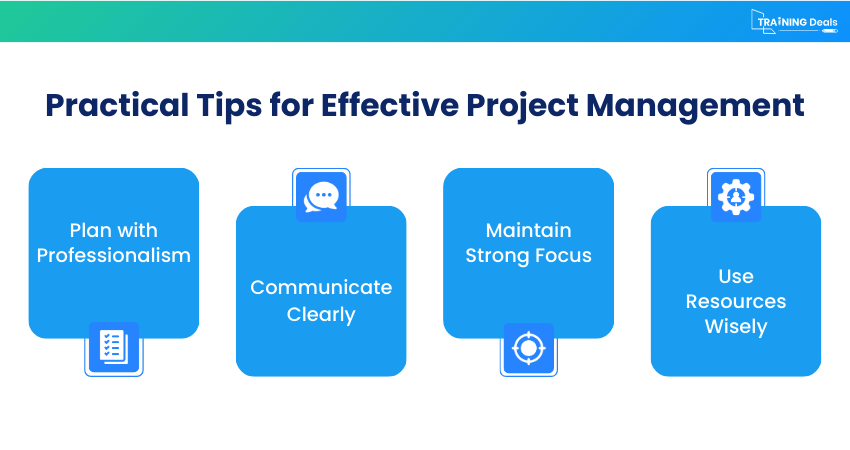
1) Plan with Professionalism
Planning is a highly important step for managing any project successfully. Before starting the work, it is essential to clearly understand the project goals and expected business outcomes. Once the objectives are defined, the project should be broken down into smaller tasks and stages.
Dividing the project into manageable activities helps teams set priorities, assign responsibilities, and establish realistic deadlines. A well-planned project provides a clear roadmap that guides the team throughout the entire project lifecycle.
2) Communicate Clearly
Clear communication is essential for successful project execution. Team members need to understand their tasks, responsibilities, and any changes that occur during the project. This ensures everyone stays aligned and works towards the same project goals.
Through regular meetings, updates, and shared documentation, teams can ensure that everyone remains informed and aligned. When communication flows effectively, teams can collaborate better and resolve issues more quickly.
3) Maintain Strong Focus
Losing focus during a project can lead to delays and confusion. It is important to keep the project goals clearly defined from the beginning and ensure that every task is in alignment with those objectives.
Keeping plans, tasks, and decisions documented helps teams stay organised. This ensures that both existing and newly added team members understand the project direction and continue working towards the same goals.
4) Use Resources Wisely
Effective Project Management requires careful allocation of resources, such as people, time, and tools. Project managers should review team workloads before assigning tasks to avoid overburdening employees and wasting valuable resources.
By distributing responsibilities fairly and matching tasks with team member’s skills, organisations can improve efficiency and maintain balanced workloads throughout the project. As a result, teams can work more productively and complete tasks within the planned timeline.
Conclusion
Understanding Why is Project Management Important helps organisations manage work effectively and achieve successful outcomes. From providing structure and improving communication to managing risks and resources, it ensures that projects stay organised and aligned with business goals. This makes Project Management an essential skill for both businesses and professionals.
Develop powerful and essential Project Management skills with PRINCE2® Training - Register now!
Search
- PRINCE2 vs APM: A Complete Guide to their Differences
- 10+ Project Management Tools to Boost Productivity in 2026
- What is Scrum? Agile Framework Explained
- What is Project Management? Phases, Approaches, and Benefits
- What is Agile Project Management? A Comprehensive Guide
- What are Project Management Skills: Top 25+ Skills You Must Know
- AI in Project Management: Benefits, Challenges, and Best Practices
- What is the Critical Path Method in Project Management? Explained
- What is Project Management Triangle? Key 3 Constraints Explained
- What are the Principles of Management? A Complete Overview
- ITIL Framework: Definition, Benefits and Implementation Explained
- What is Workflow Management? A Comprehensive Guide
- What is a Project Management Plan? Key Components and Benefits
- Top 15 Project Management Methodologies You Should Know in 2026
- 15 Project Management Techniques Every Manager Should Use
- Project Timeline Explained: Simple Steps to Create Effective Plans
- How to Become a Project Manager: Skills, Steps, and Career Path
- Project Charter Explained: Components & How to Write It Effectively
- Program Manager vs Project Manager: A Complete Comparison Guide
- The 5 Project Management Phases Every Professional Should Know
- What is Risk Mitigation: Types, Steps, and Best Practices
No match found
Latest Blog
What is Risk Mitigation: Types, Steps, and Best Practices
June 27, 2026
The 5 Project Management Phases Every Professional Should Know
June 23, 2026
Program Manager vs Project Manager: A Complete Comparison Guide
June 23, 2026
Project Charter Explained: Components & How to Write It Effectively
June 23, 2026
FAQ
No FAQs available for this blog.
.svg)