Maria Thompson
Managing a project can become challenging when tasks pile up, deadlines shift, and teams struggle to stay aligned. Without a clear structure, even well-planned efforts can lose direction. This is where a well-crafted Project Timeline helps simplify complexity, giving you a clear view of what needs to be done and when.
More than just a planning tool, it keeps teams coordinated, improves decision-making, and ensures steady progress throughout the project. It allows you to manage priorities, adapt to changes, and stay aligned with goals. In this blog, you will learn about What is Project Timeline, its types, how to create one, its benefits, and more. Let’s begin!
What is a Project Timeline?
A Project Timeline is a visual representation that outlines the sequence of tasks, milestones, and key activities within a project. It acts as a roadmap, guiding teams from start to finish by showing how tasks are connected and when they need to be completed. It ensures that activities are carried out in a structured manner while clearly highlighting dependencies between tasks.
In Project Management, a Project Timeline helps set expectations, track progress, and maintain accountability. It includes key details, such as dates, durations, milestones, and dependencies, keeping teams organised, improving communication, supporting risk identification, and ensuring timely delivery.
Components of Project Timeline Planning
An effective Project Timeline is built on a set of key components. Each component plays a key role in organising the workflow, ensuring activities are completed in the right order, and keeping the project aligned. Let's look at them below:
1) Project Goals and Objectives: Goals define the outcomes of the project, while objectives outline measurable steps to achieve them. Clearly defining them helps prioritise tasks and ensure the timeline supports the project’s intended results.
2) Task Breakdown and Sequencing: Projects are divided into smaller, manageable tasks to simplify planning and execution. These tasks are then arranged in a logical order, with dependencies identified to ensure smooth progression.
3) Time Estimation and Deadlines: Estimating the duration of each task helps set realistic deadlines. This ensures work is completed within a defined timeframe while considering complexity, resources, and possible delays.
4) Milestones and Key Deliverables: Milestones mark important stages in the project, while deliverables represent key outputs. These checkpoints help track progress and keep stakeholders informed of major achievements.
5) Resource Allocation: Assigning the right resources, including team members and tools, ensures tasks are completed efficiently. Also, it helps avoid workload imbalances and resource conflicts.
6) Risk Management Planning: Identifying potential risks and preparing contingency plans helps minimise disruptions. This proactive approach keeps the project timeline stable.
7) Regular Review and Updates: Project Timelines should be regularly reviewed and updated to reflect changes. Continuous monitoring helps address delays, adjust plans, and keep the project on track.
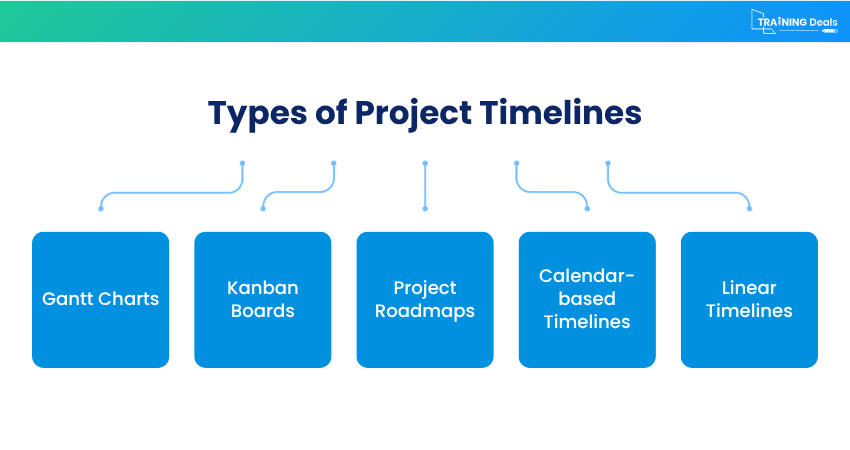
Different Types of Project Timelines
Project Timelines can differ based on the complexity, scope, and workflow of a project. Choosing the right type helps teams plan effectively and track progress in a way that suits their needs. Let’s look at them below:

1) Gantt Charts
A Gantt chart refers to a visual timeline that displays tasks using horizontal bars. It shows start and end dates, durations, and dependencies between tasks. This format is particularly useful for complex projects, as it helps teams track progress, manage resources efficiently, and identify potential delays early.
2) Kanban Boards
A Kanban board is a visual workflow timeline that organises tasks into columns such as “To Do,” “In Progress,” and “Done.” It is widely used in Agile environments. It enables real-time progress tracking, improves team collaboration, and provides flexibility in managing changing priorities.
3) Project Roadmaps
A project roadmap timeline is a high-level view that highlights key milestones, deliverables, and long-term goals. Generally, it is used in strategic planning to provide stakeholders with a clear understanding of project direction and priorities.
4) Calendar-based Timelines
A calendar timeline is a date-based view that presents tasks and deadlines in a calendar format. It is mostly ideal for short-term projects or events where specific dates are important. This is useful for making it easy to track schedules and upcoming deadlines.
5) Linear Timelines
A linear timeline is a simple, sequential representation of tasks arranged from start to finish. It is ideal for smaller projects with minimal dependencies. It offers a clear and straightforward structure, making it easy for teams to follow and manage tasks efficiently.
Learn the fundamentals of Project Management and build a strong foundation with PRINCE2® Foundation Training – Join now!
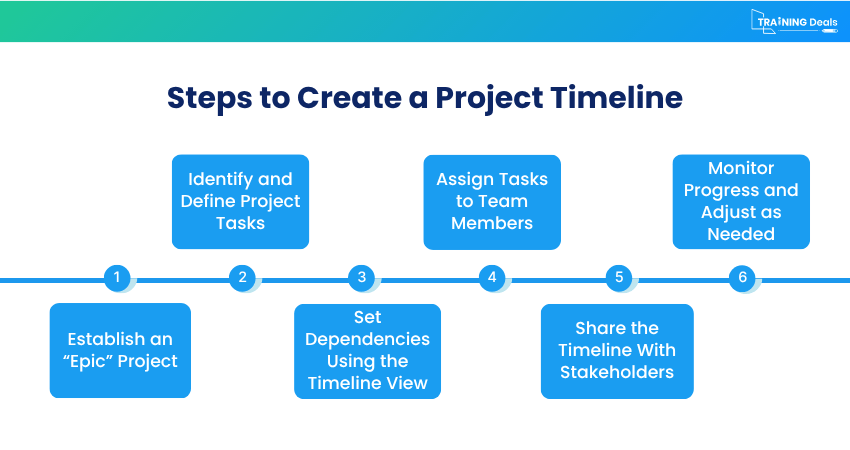
How to Create a Project Timeline?
Creating a Project Timeline requires a structured approach to ensure clarity, accuracy, and alignment with project goals. A well-planned timeline improves organisation, enhances accountability, and helps teams deliver projects on time. Let’s go through the key steps below:

Step 1: Establish an “Epic” Project
Begin by clearly defining the scope of your project. Break it into major phases or “epics,” which represent large sections of work. This enables you to understand the overall structure and ensures the Project Timeline is aligned with project objectives from the beginning.
Step 2: Identify and Define Project Tasks
Divide each phase into smaller, manageable tasks. Here, include key details, such as descriptions, priorities, and deadlines, to avoid confusion. A well-defined task list provides full visibility of the work required and supports more accurate planning.
Step 3: Set Dependencies Using the Timeline View
Now, arrange tasks in a logical order and identify dependencies between them. This ensures that tasks are completed in the right sequence, reducing delays and helping teams stay aligned on top priorities.
Step 4: Assign Tasks to Team Members
Then, allocate tasks to team members based on their skills and availability. Through a balanced resource allocation, it helps avoid workload issues, ensures accountability, and improves overall efficiency.
Step 5: Share the Timeline With Stakeholders
Share the timeline with stakeholders and team members to maintain transparency. This ensures everyone understands responsibilities, deadlines, and expectations. Clear communication strengthens collaboration and keeps all parties aligned throughout the project lifecycle.
Step 6: Monitor Progress and Adjust as Needed
Lastly, continuously track progress against the timeline and update it when needed. Identify delays early, compare your plan versus actual progress, and take corrective actions to keep the project on track. Regular updates ensure the timeline remains accurate and relevant.
Balance flexibility with full control and deliver projects faster without losing structure by joining the PRINCE2 Agile® Foundation and Practitioner Training now!
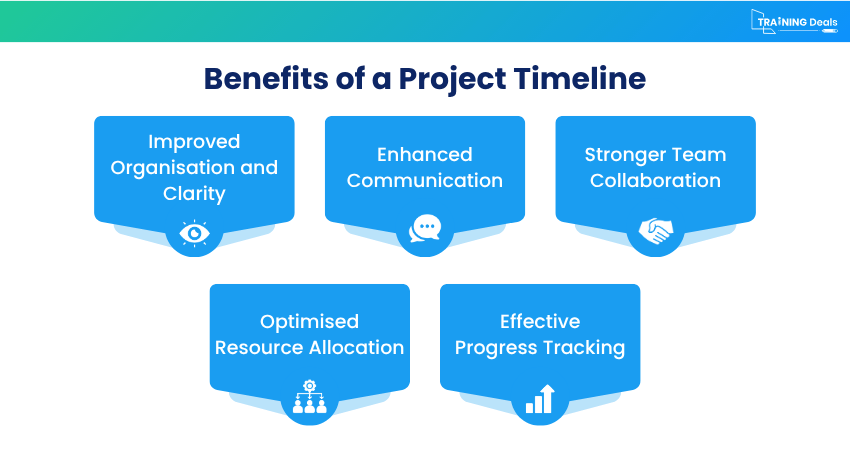
Benefits of a Project Timeline
A Project Timeline plays a key role in improving project accuracy, efficiency, and overall coordination. By providing a clear structure, it helps teams stay organised and focused throughout the project lifecycle. Let’s look at its key benefits below:

1) Improved Organisation and Clarity
A Project Timeline breaks complex projects into smaller, manageable tasks, making it easier to understand schedules, deadlines, and requirements. This structured approach ensures everyone knows their responsibilities and what needs to be delivered.
2) Enhanced Communication
Project Timeline serves as a central reference point for all project details, reducing misunderstandings and confusion. By keeping everyone aligned, it helps identify potential risks early and supports better decision-making.
3) Stronger Team Collaboration
With a shared view of tasks, deadlines, and milestones, team members can easily understand how their work fits into the bigger picture. This encourages coordination and teamwork towards achieving common business goals.
4) Optimised Resource Allocation
A Project Timeline is helpful for allocating resources, such as time, budget, and personnel, more effectively. This ensures balanced workloads, prevents resource shortages, and improves overall project efficiency.
5) Effective Progress Tracking
By dividing work into smaller tasks, it becomes easier to monitor progress against planned milestones. This helps teams to quickly identify delays, take corrective actions, and keep the project on track.
Learn how to manage projects with flexibility and the right way by signing up for the PRINCE2 Agile® Foundation Training today!
Project Timeline Examples
Project Timelines can vary depending on the type and complexity of the project. Let’s look at some practical examples below that show how timelines are structured:
1) Software Development Project Timeline
Project: Developing a new mobile application.
a) Phase 1: Initiation and Planning
This phase focuses on gathering requirements and defining the project scope. A clear plan and timeline are created to guide execution
.
Milestone: Project plan approved.
b) Phase 2: Design and Prototyping
The team creates wireframes, UI designs, and develops a prototype to validate the concept and ensure it meets requirements.
Milestone: Prototype approved.
c) Phase 3: Development
This phase involves building core functionalities, implementing features, and integrating systems to develop the product.
Milestone: Beta version ready.
d) Phase 4: Testing
Testing ensures quality through bug fixes and user acceptance testing, confirming the product is ready for release.
Milestone: Application passes quality assurance.
e) Phase 5: Launch
The final phase includes preparing release materials and deploying the application for users.
Milestone: Application launched.
2) Marketing Campaign Timeline
Project: Launching a product through an online campaign.
a) Phase 1: Pre-launch Planning
This phase defines campaign goals, target audience, and creates necessary content and creative assets.
Milestone: Campaign content finalised.
b) Phase 2: Campaign Setup
The team sets up ads, landing pages, and communication channels to prepare for launch.
Milestone: Campaign ready for launch.
c) Phase 3: Launch and Promotion
Campaigns go live across platforms, including ads, influencer outreach, and promotional activities.
Milestone: Campaign live.
d) Phase 4: Analysis and Optimisation
This phase focuses on tracking performance and refining strategies to improve results.
Milestone: Campaign results evaluated.
Best Practices for Managing Project Timelines
Effective Project Timeline management practices ensure that projects stay on track, meet deadlines, and deliver expected results. Let's look at some of the best practices below:
1) Define Clear Milestones and Deadlines: Set clear milestones to track progress and ensure key deliverables are completed on time. Use realistic deadlines based on task complexity and available resources.
2) Break the Project Into Manageable Tasks: Divide the project into smaller tasks with clear outcomes. This makes planning, tracking, and resource allocation easier while reducing the risk of missed work.
3) Identify Task Dependencies: Understand how tasks are connected and sequence them correctly. This helps prevent delays and ensures work progresses in a logical order.
4) Allocate Resources Effectively: Assign the right people, tools, and budget to each task. Balanced resource allocation prevents overload and supports timely task completion.
5) Use Project Management Tools: Leverage tools like Gantt charts or Kanban boards to visualise timelines, track progress, and make real-time updates for better coordination.
6) Set Realistic Timelines: Avoid overly ambitious schedules. Consider risks, task complexity, and potential delays to create achievable timelines.
7) Monitor Progress Regularly: Conduct regular check-ins to track performance and identify issues early. This helps teams make timely adjustments and stay on track.
8) Plan for Risks: Identify potential risks in advance and prepare contingency plans. This reduces the impact of unexpected issues on the timeline.
9) Communicate with Stakeholders: Keep stakeholders informed about progress, updates, and changes. Clear communication ensures alignment and manages expectations.
10) Document Changes and Decisions: Record any timeline updates and decisions made. This improves transparency and accountability and provides insights for future projects.
Apply skills in real scenarios and drive results with proven methods by joining the PRINCE2® Practitioner Training now!
Difference Between a Project Schedule and Timeline
While both the project schedule and a Project Timeline are crucial for planning and managing work, they serve different purposes. Understanding the difference helps teams choose the right approach for effective planning and communication. Let's look at their differences in the table below:

A project schedule is focused on execution, helping teams understand what needs to be done, when it should be completed, and who is responsible. It breaks the project into smaller tasks, making it easier to handle workloads and ensure every activity is completed on time.
In contrast, a Project Timeline provides a high-level view of the project, highlighting important milestones and deadlines in a visual format. It helps teams and stakeholders understand progress, identify potential delays, and stay aligned with overall project goals.
Conclusion
A well-planned Project Timeline helps teams stay organised, meet deadlines, and manage changes effectively. By understanding its structure and applying best practices, you can improve coordination, reduce delays, and ensure smoother project delivery with better overall results consistently.
Build important Project Management skills and turn plans into real business results with the PRINCE2® Training – Sign up now!
Search
- PRINCE2 vs APM: A Complete Guide to their Differences
- 10+ Project Management Tools to Boost Productivity in 2026
- What is Scrum? Agile Framework Explained
- What is Project Management? Phases, Approaches, and Benefits
- What is Agile Project Management? A Comprehensive Guide
- What are Project Management Skills: Top 25+ Skills You Must Know
- AI in Project Management: Benefits, Challenges, and Best Practices
- What is the Critical Path Method in Project Management? Explained
- What is Project Management Triangle? Key 3 Constraints Explained
- What are the Principles of Management? A Complete Overview
- ITIL Framework: Definition, Benefits and Implementation Explained
- What is Workflow Management? A Comprehensive Guide
- What is a Project Management Plan? Key Components and Benefits
- Why is Project Management Important? Top 12 Reasons & Tips
- Top 15 Project Management Methodologies You Should Know in 2026
- How to Become a Project Manager: Skills, Steps, and Career Path
- The 5 Project Management Phases Every Professional Should Know
- Program Manager vs Project Manager: A Complete Comparison Guide
- Project Charter: Explained Components & How to Write it Effectively
No match found
Latest Blog
What is Project Timeline? Definition, Types, and Examples
May 01, 2026Project Charter: Explained Components & How to Write it Effectively
May 01, 2026Program Manager vs Project Manager: A Complete Comparison Guide
April 18, 2026The 5 Project Management Phases Every Professional Should Know
April 18, 2026Frequently Asked Questions
Generally, Project Timelines should be updated weekly to reflect progress, manage expectations, and address delays. Fast-paced projects may need daily updates, while slower ones can be reviewed fortnightly or monthly.
The critical path in a Project Timeline is the longest sequence of dependent tasks that determines the shortest time needed to complete a project. These tasks have no slack, meaning any delay directly impacts the overall deadline, making them essential for timely project delivery.
Common Project Timeline mistakes include setting unrealistic deadlines, ignoring task dependencies, and not allowing buffer time. These issues lead to delays, budget overruns, and team burnout.