.svg)


The 5 Project Management Phases Every Professional Should Know
Explore the five Project Management Phases, from initiation to closure, and learn how they guide projects to stay on track, within scope, time, and budget. These stages bring clarity, helping teams plan better and manage challenges. This leads organisations to improve efficiency, reduce risks, and deliver consistent, high-quality results.
Maria Thompson
Ever started a project feeling excited, only to get lost in tasks, deadlines, and constant changes? You are not alone. This is exactly why Project Management Phases matter, as they bring structure to chaos and turn big, overwhelming projects into clear, manageable steps that teams can confidently follow.
Whether you are leading a team or managing your own work, the Project Management Phases act like a roadmap that keeps everything on track. This blog explains the five phases, key benefits, and best practices to help you stay organised, avoid last-minute stress, and deliver results smoothly. Now, let’s take a closer look at how it all works!
What is the Project Life Cycle?
The project life cycle is a structured five-phase framework used to guide a project from start to completion. It outlines each stage, from initiation to final delivery, and clearly defines what teams need to achieve at every phase, ensuring a smooth, efficient, well-planned, and organised workflow.
By breaking the project into manageable steps, teams can better understand the bigger picture, anticipate challenges, and stay focused on results. When supported by proper documentation and Project Management tools, this approach improves coordination, efficiency, and overall project success.

5 Phases of Project Management Life Cycle
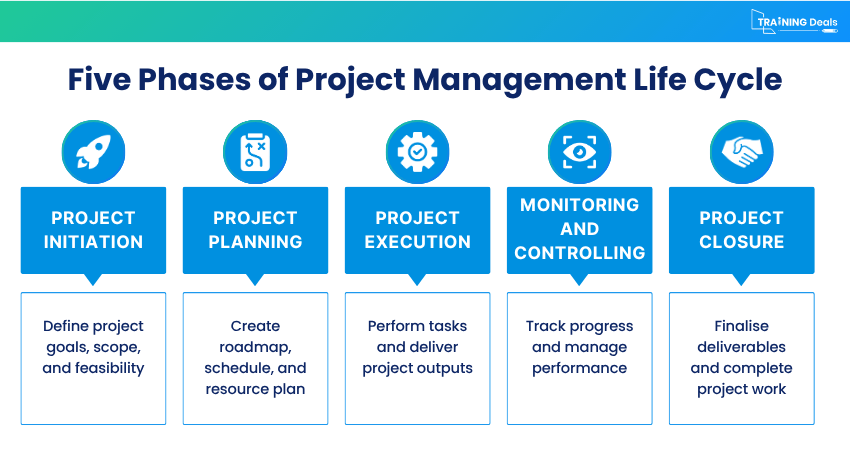
There are five key phases in the Project Management lifecycle that guide a project from start to finish: initiation, planning, execution, monitoring and controlling, and closure. Each phase plays a key role in structuring the project, ensuring tasks are clearly defined, and keeping everything aligned with the overall objectives.
By following these phases, teams can plan effectively, track progress, and manage challenges throughout the project. This structured approach improves coordination, enhances efficiency, and helps deliver successful outcomes. Let’s explore each phase in detail to understand its role:
Phase 1: Project Initiation
The initiation phase marks the beginning of the Project Management Phases, where the project idea is evaluated and clearly defined. During this stage, feasibility is assessed, objectives are outlined, and stakeholders are identified to ensure the project aligns with organisational goals and expectations.
Project Managers collaborate with stakeholders to understand requirements and define the project’s purpose. A business case is developed to justify the project, ensuring it delivers value and sets up a strong foundation before moving forward to the next phase efficiently.
Phase 2: Project Planning
The planning phase is a critical stage in the Project Management Phases, where detailed strategies are created to guide the project. It establishes a clear direction by outlining tasks, timelines, and key deliverables required to achieve project objectives successfully with clarity and confidence at every stage.
Project Managers define scope, schedule, budget, and resources while developing risk management and communication plans. This phase reduces uncertainties, ensures coordination, and provides a structured roadmap that helps teams execute tasks efficiently and stay aligned with project goals.
Phase 3: Project Execution
The execution phase is where plans are put into action within the Project Management Phases. Teams begin working on tasks, collaborating closely to produce deliverables while following the defined schedule and ensuring alignment with project requirements and expectations throughout the entire project lifecycle.
Project Managers oversee resource utilisation, maintain communication, and ensure tasks are completed efficiently. Regular updates are shared with stakeholders, and strong leadership helps maintain productivity, ensuring the project progresses smoothly while meeting quality standards and deadlines.
Phase 4: Project Monitoring and Controlling
The monitoring and controlling phases run alongside execution in the Project Management Phases, focusing on tracking progress and maintaining control. It ensures that project activities remain aligned with plans, helping teams identify issues early and make necessary adjustments in a timely and effective manner.
Project Managers monitor performance metrics such as cost, schedule, and quality. Any deviations are addressed promptly to keep the project on track. This phase ensures objectives are achieved efficiently while maintaining standards and preventing risks from impacting outcomes.
Phase 5: Project Closure
The closure phase is the final phase of the Project Management Phases, where all project activities are completed and formally concluded. It ensures that deliverables are finalised, approved, and handed over to stakeholders successfully. This phase confirms that all objectives have been met and no outstanding tasks remain.
Project Managers review overall performance, document outcomes, and identify lessons learned. Proper documentation and evaluation help improve future projects, ensuring teams gain insights and continuously enhance processes for better efficiency and long-term success. This also supports improved planning and decision-making in future projects.
Learn structured Project Management basics and build a strong career foundation with the PRINCE2® Foundation Training – Join now!
Why are the Project Management Phases Important?
Project Management Phases are important because they provide a clear structure for handling a project from start to finish. They help teams break down complex work into manageable steps, ensuring better planning, organisation, and coordination across all stages of the project.
These phases support better decision-making by helping teams track progress, manage risks, and use resources efficiently. By following a structured approach, organisations improve consistency, maintain quality, and deliver projects on time while meeting stakeholder expectations.
Benefits of Project Life Cycle Management
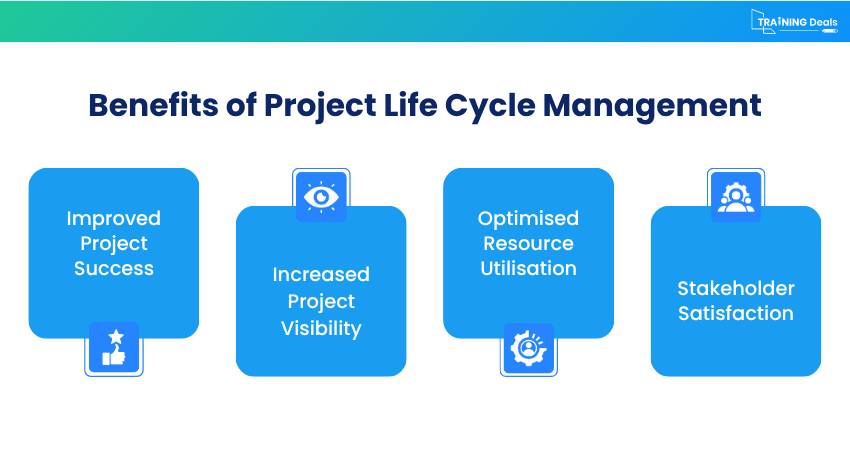
Project Life Cycle Management provides a structured approach to plan, execute, and control projects efficiently. It improves coordination, communication, and resource use while reducing risks and delays. Let’s explore the key benefits:
1) Improved Project Success
Following a defined project life cycle increases the likelihood of success by reducing risks and keeping work organised. It helps teams stay aligned with goals, manage challenges effectively, and ensure projects are completed on time, within scope, and within budget.
2) Increased Project Visibility
A structured life cycle improves visibility by enabling teams and stakeholders to monitor progress at each stage. This transparency makes it easier to identify issues early, maintain accountability, and ensure the project stays on track throughout its lifecycle.
3) Optimised Resource Utilisation
Effective planning ensures that resources such as time, budget, and workforce are used efficiently. It prevents overuse or underuse of resources, improves productivity, and supports better decision-making across all phases of the project.
4) Stakeholder Satisfaction
Clear communication and regular updates help keep stakeholders informed and engaged. This builds trust, reduces misunderstandings, and ensures expectations are met, leading to stronger support and overall satisfaction with project outcomes.
Blend structure and agility to deliver projects with confidence. Join for the PRINCE2 Agile® Foundation and Practitioner Training today!
Challenges of Project Life Cycle Management
Project Life Cycle Management can face challenges such as scope creep, resource constraints, and communication breakdowns, which can affect progress and outcomes. Addressing these issues early helps maintain control and efficiency. Let’s explore these challenges in detail:
1) Scope Creep
Scope creep occurs when project requirements expand beyond the original plan. This can lead to delays, increased costs, and strain on resources. Without proper control, it becomes difficult to stay aligned with objectives and maintain the planned timeline.
2) Resource Constraints
Resource constraints arise when there is a shortage of time, budget, or workforce. This can slow down progress and impact the successful completion of the project. Careful planning and early assessment of resources are essential to avoid disruptions.
3) Communication Breakdowns
Communication breakdowns happen when information is not shared clearly among team members and stakeholders. This can reduce productivity, create misunderstandings, and affect decision-making. Strong communication practices are important to keep everyone aligned and informed.
Turn theory into practice with advanced PRINCE2® Practitioner Training – Register today!
Best Practices for Project Life Cycle Management
Effective Project Life Cycle Management requires a structured approach and consistent effort. By applying proven techniques, teams can improve coordination, track progress, and deliver successful outcomes. Let’s look at some key practices:
1) Define Clear Milestones
Breaking the project into clear milestones with deadlines makes work manageable and easier to track. It helps teams measure progress, stay focused on deliverables, and ensure each phase is completed on time successfully.
2) Maintain Consistent Communication
Regular communication keeps teams aligned on progress, challenges, and updates. It helps identify bottlenecks early, encourages collaboration, and ensures decisions are made quickly, improving efficiency and coordination throughout the project lifecycle.
3) Involve Stakeholders Early
Involving stakeholders early ensures clear expectations and better alignment with goals. Regular feedback and updates build trust, reduce misunderstandings, and help teams deliver outcomes that meet stakeholder needs effectively.
Conclusion
Understanding how projects move through structured stages helps teams plan, execute, and deliver successfully with clarity and control. By following these steps, organisations can manage risks, optimise resources, and achieve goals efficiently. Mastering Project Management Phases ensures consistent results and supports long-term success across industries.
Build globally recognised Project Management skills with PRINCE2® Training - Join today!
Search
- PRINCE2 vs APM: A Complete Guide to their Differences
- 10+ Project Management Tools to Boost Productivity in 2026
- What is Scrum? Agile Framework Explained
- What is Project Management? Phases, Approaches, and Benefits
- What is Agile Project Management? A Comprehensive Guide
- What are Project Management Skills: Top 25+ Skills You Must Know
- AI in Project Management: Benefits, Challenges, and Best Practices
- What is the Critical Path Method in Project Management? Explained
- What is Project Management Triangle? Key 3 Constraints Explained
- What are the Principles of Management? A Complete Overview
- ITIL Framework: Definition, Benefits and Implementation Explained
- What is Workflow Management? A Comprehensive Guide
- What is a Project Management Plan? Key Components and Benefits
- Why is Project Management Important? Top 12 Reasons & Tips
- Top 15 Project Management Methodologies You Should Know in 2026
- 15 Project Management Techniques Every Manager Should Use
- Project Timeline Explained: Simple Steps to Create Effective Plans
- How to Become a Project Manager: Skills, Steps, and Career Path
- Project Charter Explained: Components & How to Write It Effectively
- Program Manager vs Project Manager: A Complete Comparison Guide
- What is Risk Mitigation: Types, Steps, and Best Practices
No match found
Latest Blog
What is Risk Mitigation: Types, Steps, and Best Practices
June 27, 2026
The 5 Project Management Phases Every Professional Should Know
June 23, 2026
Program Manager vs Project Manager: A Complete Comparison Guide
June 23, 2026
Project Charter Explained: Components & How to Write It Effectively
June 23, 2026
FAQ
The five pillars of Project Management are Initiation, Planning, Execution, Monitoring and Controlling, and Closing. They guide a project from idea to completion, ensuring work stays organised, progress is tracked, and goals are delivered on time and within budget.
Even Agile projects follow defined phases because structure helps manage complexity, align stakeholders, and maintain quality. While Agile is flexible and iterative, these phases ensure clear direction, better coordination, controlled progress, and consistent delivery of value.
L1, L2, and L3 in Project Management refer to levels of detail. L1 shows high-level project goals and milestones, L2 breaks them into key tasks or phases, and L3 provides detailed activities and steps, helping teams plan, track progress, and manage work effectively.
.svg)