.svg)


What is Agile Project Management? A Comprehensive Guide
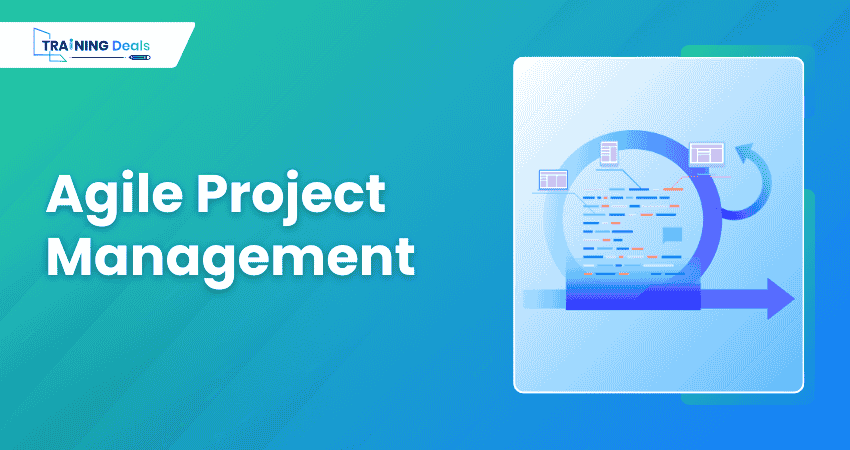
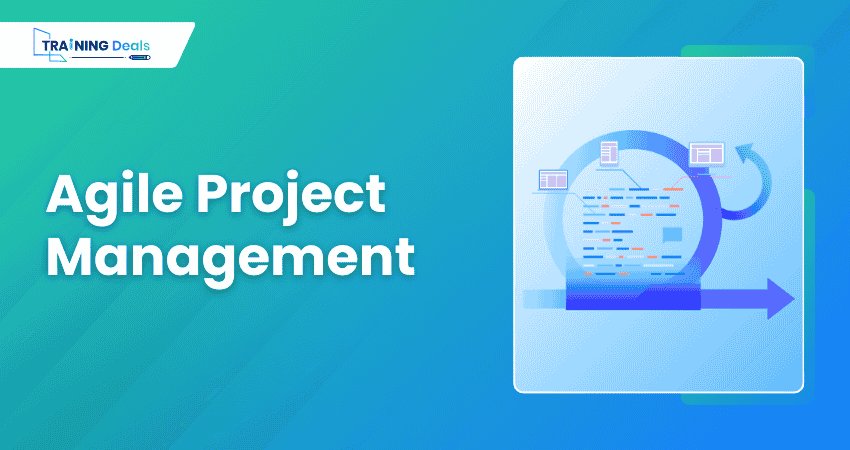
Agile Project Management is an iterative approach that delivers work in short cycles, adapts to change, and emphasises collaboration and customer value. By prioritising flexibility, regular feedback, and continuous improvement, teams are able to respond to change quickly while delivering consistent value throughout the project.
David Walter
Agile Project Management emerged from challenges that most teams recognise. The plan was approved, timelines were set, and then everything changed. New requirements appeared, priorities shifted, and rigid processes slowed progress. Agile emerged as a practical response, giving teams a flexible and collaborative way to deliver value while adapting to change.
Let’s explore what Agile Project Management (APM) is and how it has evolved over time. You will also explore the key principles and benefits that make Agile a powerful fit for today’s fast-moving projects.
What is Agile Project Management (APM)?
Agile Project Management (APM) is a flexible and iterative approach to managing projects that concentrates on delivering value in small, manageable cycles rather than all at once. Work is divided into short phases, often called sprints, allowing teams to review progress regularly and make adjustments as requirements change.
Unlike rigid, linear methods like Waterfall, Agile emphasises collaboration, continuous feedback, and customer value. It enables teams to respond quickly to change, learn continuously, and deliver high-quality outcomes. Although widely used in Software Development, Agile Project Management is now applied across many industries where speed, flexibility, and adaptability are essential.
A Brief History of the Agile Project Management Methodology
Agile Project Management did not emerge suddenly. It evolved over time as teams searched for more flexible and efficient ways to deliver value in changing environments. The key milestones in its development include:
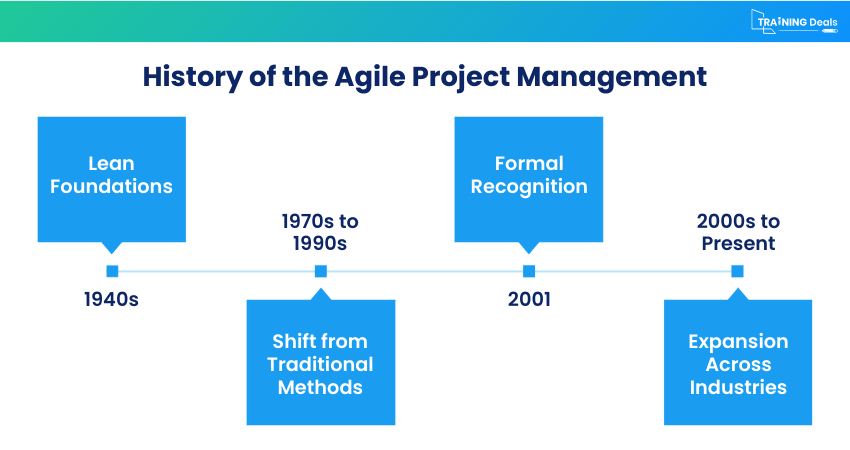
1) 1940s – Lean Foundations: Agile thinking originated from lean manufacturing practices at Toyota Motor Corporation, which focused on reducing waste, improving efficiency, and delivering value quickly.
2) 1970s to 1990s – Shift from Traditional Methods: These ideas were later adopted by software teams to address the limitations of rigid methods like Waterfall, where change was costly and feedback arrived late.
3) 2001 – Formal Recognition: Agile gained global recognition with the Agile Manifesto, highlighting flexibility, collaboration, and customer value over rigid plans and heavy documentation.
4) 2000s to Present – Expansion Across Industries: Agile later expanded beyond software and is now widely used across industries that require adaptability, faster delivery, and continuous improvement.
Agile Project Management Framework 1: Scrum
Scrum is a structured Agile framework used within Agile Project Management to deliver work in fixed-length sprints, usually lasting two to four weeks. Each sprint produces usable outcomes and enables regular feedback. This helps teams stay focused, adapt quickly, and improve continuously.
Scrum defines clear roles, including the Product Owner, Scrum Master, and Development Team. Work is managed through a prioritised Product Backlog and a Sprint Backlog. Regular ceremonies such as sprint planning, daily stand-ups, sprint reviews, and retrospectives create transparency, establish a consistent rhythm, and support continuous improvement.
Agile Project Management Framework 2: Kanban
Kanban is an Agile framework that supports Agile Project Management by focusing on continuous delivery and workflow efficiency. Work is visualised on a board with stages such as “To Do,” “In Progress,” and “Done,” making progress and bottlenecks easy to identify and resolve quickly.
Unlike Scrum, Kanban does not operate in fixed sprints. Instead, it limits work in progress to align with the team’s capacity. This allows teams to release work at any time and respond quickly to changing priorities, making Kanban especially suitable for environments with ongoing, fast-changing, or unpredictable workloads.
Build advanced Software Engineering skills and apply Agile practices confidently. Join our SAFe® Agile Software Engineering Training now!
Why do we Need Agile Project Management?
Modern projects often face frequent changes in requirements, priorities, and technology, which makes rigid planning methods less effective. Traditional approaches struggle to respond quickly when customer needs or market conditions shift.
Agile Project Management is needed because it enables teams to adapt through short delivery cycles and regular feedback. This approach reduces risk, improves collaboration, and keeps projects aligned with customer expectations while delivering value consistently.
The Key Principles of Agile Project Management
The key principles of Agile Project Management explain how teams plan, work, and deliver value in real projects. They include:
1) Customer Satisfaction: Deliver valuable outcomes early and continuously
2) Embrace Change: Welcome changing requirements to gain a competitive advantage
3) Frequent Delivery: Release working outcomes in short cycles
4) Collaboration: Ensure daily cooperation between the business and teams
5) Motivated Individuals: Build projects around trusted, motivated people
6) Face-to-face Communication: Prefer direct communication for clarity
7) Working Outcomes: Use working results as the main measure of progress
8) Sustainable Pace: Maintain a steady, manageable work rhythm
9) Technical Excellence: Focus on quality and good design continuously
10) Simplicity: Maximise essential work and minimise waste
11) Self-organising Teams: Encourage teams to shape solutions independently
12) Reflect and Adjust: Review regularly and improve continuously
What are the Values of Agile Project Management?
The values of Agile Project Management define the mindset behind Agile decision-making and, in practice, emphasise flexibility, collaboration, and customer value over rigid processes and fixed plans. They include:
1) People and Communication First: Agile values individuals and open interaction, recognising that motivated teams and strong collaboration deliver better results than rigid processes or tools.
2) Deliver Working Value, Not Paperwork: Agile focuses on producing useful, working outcomes regularly, using documentation only when it genuinely supports delivery.
3) Partnership with Customers: Agile encourages continuous collaboration with customers so solutions evolve based on real needs rather than fixed contracts.
4) Adaptability Over Fixed Plans: Agile embraces change throughout the project, enabling teams to respond quickly and stay aligned with shifting priorities.
Learn Agile fundamentals and confidently apply them in real projects with our Agile Project Management Foundation (AgilePM® v3) Training – Join now!
What are the Benefits of Agile Project Management?
Agile Project Management offers practical advantages that directly impact project success. These benefits become clearer when broken down into specific areas.
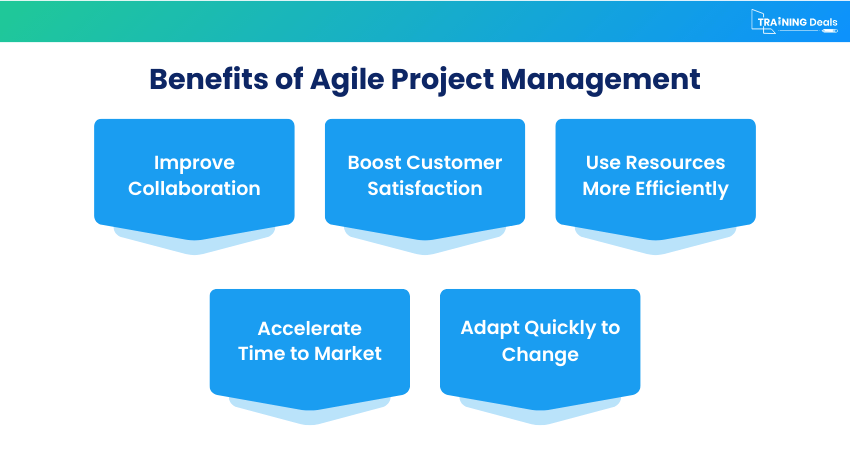
1) Improve Collaboration
Agile encourages strong collaboration across teams and departments. Regular check-ins, shared ownership, and clear roles keep everyone aligned, support quick issue resolution, and promote creativity and smooth project delivery.
2) Boost Customer Satisfaction
Agile keeps customers involved through frequent communication and incremental delivery. Regular updates and early feedback help reduce delays, ensure continuous improvement, and help deliver outcomes that better meet customer needs.
3) Use Resources More Efficiently
Agile helps teams identify changes early, reducing wasted effort and unnecessary rework. By adjusting priorities at the right time, teams can save time and costs, ensuring resources are focused on high-value work rather than fixing issues late in the project.
4) Accelerate Time to Market
Agile enables faster delivery by producing usable outcomes in every iteration. Each cycle delivers something potentially releasable, allowing teams to gather feedback, test ideas, or reach users sooner, which is especially valuable in competitive markets.
5) Adapt Quickly to Change
Unlike traditional approaches that lock in decisions early, Agile welcomes change at any stage. Teams can respond to new requirements within short cycles, reducing risk and ensuring the project reflects real conditions rather than outdated assumptions.
Upgrade your Agile skills and confidently manage dynamic projects effectively. Join our Agile Project Management Practitioner (AgilePM® v3) Training now!
Traditional Project Management vs Agile Project Management
Traditional Project Management follows a linear, plan-driven approach with detailed upfront planning, defined roles, and comprehensive documentation. Customer involvement is limited, making it best suited for projects with stable and well-defined requirements.
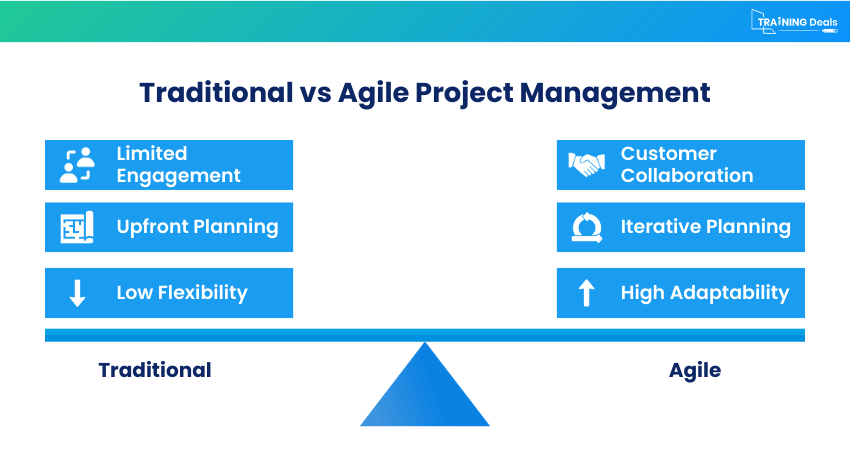
Agile Project Management is iterative and flexible, delivering work in short cycles with continuous feedback and collaboration. It relies on self-organising teams and frequent releases, making it best for projects where requirements evolve and adaptability is essential.
Challenges in Adopting Agile Project Management and How to Solve Them
Adopting Agile Project Management can present several challenges, especially for organisations transitioning from traditional methods. Common challenges and their solutions include:
1) Resistance to Change: Teams may struggle with new ways of working; this can be addressed with training, leadership support, and gradual adoption.
2) Lack of Agile Knowledge: Misunderstanding Agile practices can cause confusion; regular coaching and clear guidelines help build confidence.
3) Inconsistent Practices: Different teams may apply Agile differently; setting shared standards and frameworks improves alignment.
4) Limited Stakeholder Involvement: Low engagement can reduce effectiveness; encouraging regular collaboration and feedback solves this issue.
5) Cultural Barriers: Rigid hierarchies may conflict with Agile values; fostering trust and empowering teams supports successful adoption.
Conclusion
Agile Project Management empowers teams to work smarter in fast-changing environments. By combining flexibility, collaboration, and continuous improvement, it helps organisations deliver real value faster. When applied with the right mindset and practices, Agile transforms projects into adaptive, customer-focused journeys that drive lasting success.
Explore Agile courses and build skills to lead modern projects with confidence and speed with our Agile Training – Register today!
Search
- PRINCE2 vs APM: A Complete Guide to their Differences
- 10+ Project Management Tools to Boost Productivity in 2026
- What is Scrum? Agile Framework Explained
- What is Project Management? Phases, Approaches, and Benefits
- What are Project Management Skills: Top 25+ Skills You Must Know
- AI in Project Management: Benefits, Challenges, and Best Practices
- What is the Critical Path Method in Project Management? Explained
- What is Project Management Triangle? Key 3 Constraints Explained
- What are the Principles of Management? A Complete Overview
- ITIL Framework: Definition, Benefits and Implementation Explained
- What is Workflow Management? A Comprehensive Guide
- What is a Project Management Plan? Key Components and Benefits
- Why is Project Management Important? Top 12 Reasons & Tips
- Top 15 Project Management Methodologies You Should Know in 2026
- 15 Project Management Techniques Every Manager Should Use
- Project Timeline Explained: Simple Steps to Create Effective Plans
- How to Become a Project Manager: Skills, Steps, and Career Path
- Project Charter Explained: Components & How to Write It Effectively
- Program Manager vs Project Manager: A Complete Comparison Guide
- The 5 Project Management Phases Every Professional Should Know
- What is Risk Mitigation: Types, Steps, and Best Practices
No match found
Latest Blog
What is Risk Mitigation: Types, Steps, and Best Practices
June 27, 2026
The 5 Project Management Phases Every Professional Should Know
June 23, 2026
Program Manager vs Project Manager: A Complete Comparison Guide
June 23, 2026
Project Charter Explained: Components & How to Write It Effectively
June 23, 2026
FAQ
No FAQs available for this blog.
.svg)