.svg)


How to Become a Project Manager: Skills, Steps, and Career Path
How to Become a Project Manager explained with step-by-step guidance on skills, qualifications, certifications, career paths, and entry-level opportunities. It is a lucrative profession that leads projects from beginning to end, ensuring tasks are completed on time, within budget, and aligned with long-term business goals.

Maria Thompson
Many professionals step into project responsibilities without realising it, managing timelines, coordinating with teams, or solving daily challenges at work. If this sounds familiar, you are already building the foundation for a Project Management career. Understanding How to Become a Project Manager helps you turn these experiences into a structured path with strong growth potential.
Organisations are dependent on skilled professionals to deliver results efficiently and lead teams confidently. Learning to become a Project Manager not only builds your leadership and organisational skills but also prepares you for a role that offers strong career progression and impact across industries. In this blog, you will learn How to Become a Project Manager, their key skills, salary, and more. Let’s begin!
What is Project Management?
Project Management is the process of planning, organising, and overseeing a project to achieve defined goals within an organisation. It involves coordinating tasks, managing resources, and ensuring work is completed on time and within scope, while guiding teams towards successful outcomes.
It requires strong leadership, effective planning, and the ability to motivate and align teams. Although direct experience is helpful, many skills like communication, problem-solving, and organisation are transferable. This makes it possible for individuals from different backgrounds to transition into this dynamic and rewarding field.
How to Become a Project Manager?
To learn How to Become a Project Manager, you require a mix of knowledge, practical experience, and the ability to adjust to evolving project needs. That is why building both technical and soft skills is essential for managing projects efficiently. Let’s look at them below:
1) Technical Skills
Technical skills help you plan, execute, and control projects successfully. This includes budgeting, risk management, and scheduling to ensure projects stay on track. Here, familiarity with tools like Jira, Trello, and Microsoft Project can improve collaboration and task management.
Also, understanding Project Management methodologies, such as Agile, Waterfall, or PRINCE2 is important. It allows you to choose the right approach based on project requirements and improve overall efficiency.
2) Soft Skills
Soft skills are also important, as they enable you to lead teams and communicate effectively. Strong communication ensures alignment between team members and stakeholders, while leadership and decision-making keep projects moving forward.
Skills like problem-solving, adaptability, negotiation, and conflict resolution help you handle challenges smoothly and maintain a productive work environment. This ensures consistent and successful project delivery.
Turn your project knowledge into real-world project success by joining the PRINCE2® Practitioner Training now!
Key Steps to Become a Project Manager
Learning How to Become a Project Manager is a natural progression from roles where you already coordinate tasks, manage timelines, or support project delivery. To move into this role, you need the right mix of education, practical experience, and leadership ability. Let’s look in more detail below:
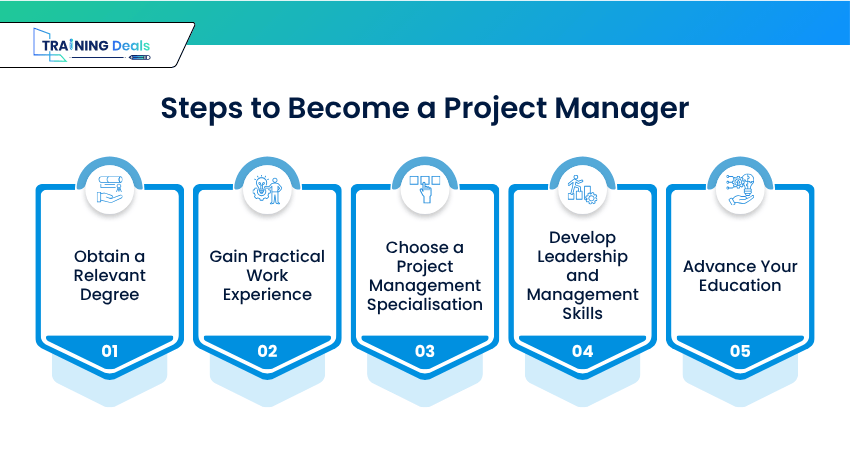
1) Obtain a Relevant Degree
A bachelor’s degree is commonly required for many Project Management roles, but the subject can vary depending on your career goals. Degrees in business, engineering, IT, or marketing are widely accepted. They help to build analytical thinking, problem-solving, and organisational skills that are essential in managing projects.
Choosing a degree aligned with your target industry can give you an added advantage. For example, a technology-focused programme can support a career in IT project management, while a business-related degree can prepare you for roles across multiple industries.
2) Gain Practical Work Experience
Gaining hands-on experience is one of the most important steps to becoming a Project Manager. Many professionals begin in entry-level roles, such as project coordinator, operations assistant, or business analyst. There, they support planning, scheduling, and communication tasks within a project.
As you gain experience, taking on additional responsibilities, such as managing timelines or leading small tasks, helps build confidence and credibility. Even without the official title, working on projects and demonstrating strong communication and problem-solving skills can position you for a formal Project Management role.
3) Choose a Project Management Specialisation
Focusing on a specific industry or area of Project Management helps you build deeper expertise and stand out in the job market. Common specialisations include IT, construction, healthcare, finance, and marketing. Each requires an understanding of unique processes and challenges.
Your specialisation must align with your education or early career experience. This makes it easier to develop relevant skills. Over time, this focused knowledge helps you deliver better results, build a strong professional network, and explore more advanced opportunities within your chosen field.
4) Develop Leadership and Management Skills
Project Managers are expected to manage a wide range of responsibilities, including budgeting, delegation, communication, and conflict resolution. These skills are essential for managing teams effectively and ensuring projects run smoothly from start to finish.
Developing these abilities takes time and practical exposure. Starting with smaller tasks or projects allows you to gradually improve your leadership, decision-making, and coordination skills. This will help you become more confident in handling larger and more complex projects.
5) Advance Your Education
While a degree and experience can help you enter the field, certifications can strengthen your profile and demonstrate your commitment to Project Management. Professional certification credentials such as Project Management Professional (PMP) or Agile certifications are widely recognised and valued by employers.
Also, continuing your education through courses and training programmes helps you stay updated with industry trends and best practices. This ongoing learning enhances your skills and supports long-term career growth and progression in Project Management.
Blend structure with Agile for better outcomes and deliver projects faster without losing control with PRINCE2 Agile® Foundation and Practitioner Training – Join today!
What is the Average Salary of a Project Manager?
The average Project Manager salary in the UK typically ranges between £36K - £58K per year. It depends on factors such as experience, industry, and location. Entry-level professionals usually earn at the lower end, while experienced Project Managers can earn higher salaries as they take on more complex projects and responsibilities.
Also, salaries may vary based on the sector, with industries like IT, finance, and construction often offering more competitive pay. As professionals gain expertise, certifications, and leadership experience, their earning potential continues to grow over time.
How to Become a Project Manager Without Experience?
Learning How to Become a Project Manager without direct experience is possible by focusing on learning, skill-building, and practical exposure. With the right steps, you can build a strong foundation and gradually move into a Project Management role. Let’s look in more detail below:
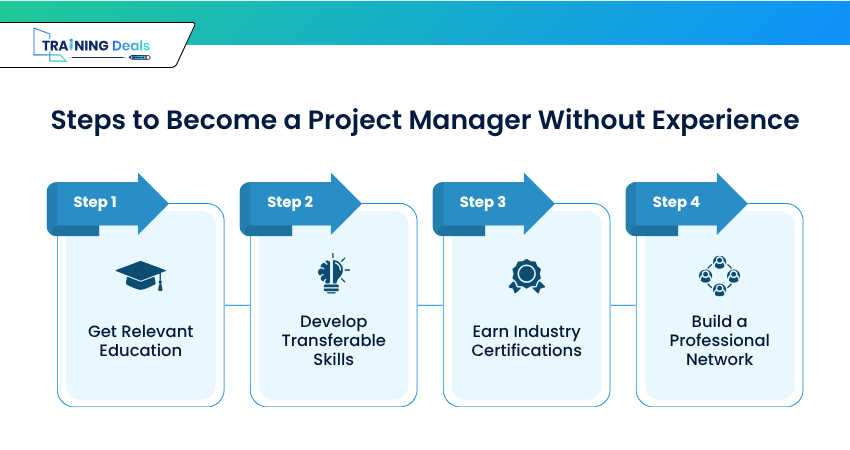
1) Get Relevant Education
Gaining relevant education is a great starting point, even if you do not have a formal degree in project management. Short-term courses or online training in areas like planning, risk management, and leadership can help you understand the fundamentals of managing projects.
These learning opportunities provide a solid foundation and show employers your commitment to developing the right knowledge. Also, they help you become familiar with key concepts, tools, and processes used in real project environments.
2) Develop Transferable Skills
Project Management is dependent heavily on skills such as communication, teamwork, time management, and problem-solving. You can build these skills through your current job, academic work, or by contributing to team-based projects.
Taking initiative and volunteering for responsibilities that involve coordination or planning can further strengthen your profile. These experiences demonstrate your ability to handle tasks and work effectively with others, even without a formal Project Management title.
3) Earn Industry Certifications
Certifications like PMP are widely recognised and can help you stand out to employers. They validate your understanding of Project Management principles and your ability to apply them in real situations.
Also, earning a certification shows dedication and professionalism. This can improve your chances of securing entry-level roles or transitioning into Project Management from another field
4) Build a Professional Network
Networking plays an important role in entering the Project Management field. Connecting with experienced professionals can provide valuable insights into the role, industry expectations, and career opportunities.
Attending events, engaging on professional platforms, or reaching out to contacts in your network can help you build relationships and discover job openings. Also, this can lead to mentorship opportunities that support your growth in this career path.
Build a solid foundation for your project career with PRINCE2® Foundation Training – Sign up now!
Core Skills Required for Project Management
To succeed as a Project Manager, you need a balance of organisational, leadership, and communication skills. These core skills help you manage tasks, guide teams, and ensure projects are delivered successfully. Let’s look at them below:
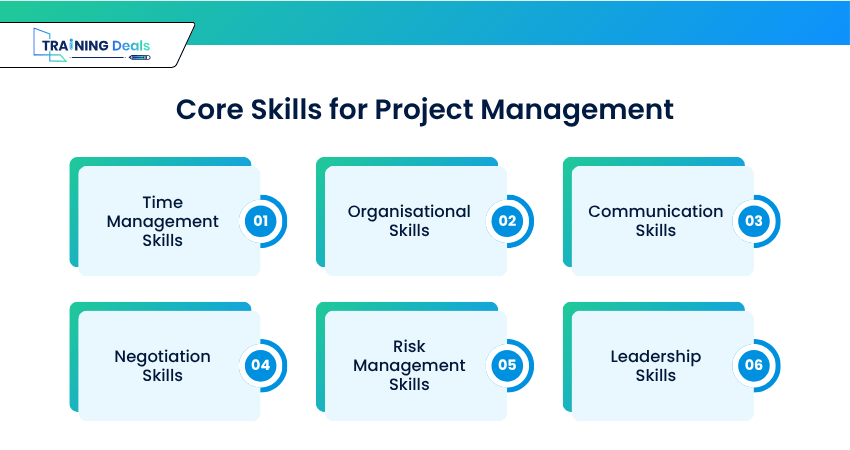
1) Time Management: Time management helps Project Managers prioritise tasks and ensure deadlines are met efficiently. It involves delegating work, focusing on high-impact activities, and avoiding distractions.
2) Organisation: Organisation ensures that all tasks, timelines, and resources are planned and tracked effectively. It helps Project Managers set clear goals, manage schedules, and maintain smooth project execution.
3) Communication: Communication enables Project Managers to clearly share goals, updates, and issues with stakeholders. Strong written, verbal, and listening skills help to keep teams aligned and reduce misunderstandings.
4) Negotiation: Negotiation skills help Project Managers manage competing priorities and limited resources. They ensure fair agreements on budgets, timelines, and workloads while maintaining positive relationships.
5) Risk Management: Risk management enables Project Managers to identify potential issues proactively. By planning solutions in advance, they can minimise disruptions and keep projects on track.
6) Leadership: Strong leadership skills help Project Managers guide, motivate, and support their teams effectively. It ensures collaboration, builds trust, and drives the team towards successful project outcomes.
Conclusion
Project Management is a journey that requires the combination of the right skills, practical experience, and continuous learning. By understanding the role, building core competencies, and following clear steps, you can confidently move forward in this career path. Learning How to Become a Project Manager prepares you with the tools to lead teams, deliver results, and grow in this dynamic and rewarding profession.
Learn how to build projects that deliver real business impact with PRINCE2® Training – Join now!
Search
- PRINCE2 vs APM: A Complete Guide to their Differences
- 10+ Project Management Tools to Boost Productivity in 2026
- What is Scrum? Agile Framework Explained
- What is Project Management? Phases, Approaches, and Benefits
- What is Agile Project Management? A Comprehensive Guide
- What are Project Management Skills: Top 25+ Skills You Must Know
- AI in Project Management: Benefits, Challenges, and Best Practices
- What is the Critical Path Method in Project Management? Explained
- What is Project Management Triangle? Key 3 Constraints Explained
- What are the Principles of Management? A Complete Overview
- ITIL Framework: Definition, Benefits and Implementation Explained
- What is Workflow Management? A Comprehensive Guide
- What is a Project Management Plan? Key Components and Benefits
- Why is Project Management Important? Top 12 Reasons & Tips
- Top 15 Project Management Methodologies You Should Know in 2026
- 15 Project Management Techniques Every Manager Should Use
- Project Timeline Explained: Simple Steps to Create Effective Plans
- Project Charter Explained: Components & How to Write It Effectively
- Program Manager vs Project Manager: A Complete Comparison Guide
- The 5 Project Management Phases Every Professional Should Know
- What is Risk Mitigation: Types, Steps, and Best Practices
No match found
Latest Blog
What is Risk Mitigation: Types, Steps, and Best Practices
June 27, 2026
The 5 Project Management Phases Every Professional Should Know
June 23, 2026
Program Manager vs Project Manager: A Complete Comparison Guide
June 23, 2026
Project Charter Explained: Components & How to Write It Effectively
June 23, 2026
FAQ
Generally, PMP is considered harder than PRINCE2 due to strict experience requirements and broader, scenario-based knowledge. Its 180-question exam over 230 minutes requires extensive preparation. In contrast, PRINCE2 focuses more on structured application, making it comparatively easier for many candidates.
Yes, you can pass the PMP exam in three months with consistent study hours daily. Focus on understanding concepts, especially Agile and hybrid approaches, instead of relying on memory only. Also, practising situational questions and using prep courses can improve your chances of success.
Both PRINCE2 and the Association for Project Management (APM) are core qualifications, and the choice depends on your goals. PRINCE2 offers a structured, process-driven approach ideal for governance-focused projects. In contrast, APM offers broader knowledge and flexibility, making it ideal for diverse and evolving project environments.
.svg)