.svg)


What are Project Management Skills: Top 25+ Skills You Must Know
The Top 25+ Project Management Skills includes soft, hard, and technical skills covering planning, leadership, risk management, and clear communication. These competencies enable Project Managers to guide teams toward goals efficiently while navigating challenges. These skills boost career growth and project success across industries.
Maria Thompson
At the heart of every successful project is an inspiring Project Manager armed with the right skills. These Project Management Skills are the ingredients that turn ideas into achievements. They combine strategy, leadership, and technical know-how. From planning and risk control to communication and decision making, these skills shape how teams perform under pressure.
In this blog, we explore more than 25 key Project Management Skills you must know to manage complexity, motivate teams, avoid common pitfalls, and consistently deliver value across industries. So read on and fuel your projects from concept to completion!
What are Project Management Skills?
Project Management Skills are the abilities that help professionals plan, organise, and deliver projects effectively. They involve setting clear objectives, managing schedules and budgets, allocating resources, and ensuring tasks are completed in line with agreed goals. Strong planning and coordination help keep projects structured and focused.
These skills also include communication, leadership, risk management, and problem-solving. Project Managers must guide teams, manage stakeholder expectations, address challenges promptly, and adapt to change. Together, these abilities support smooth project delivery while maintaining quality, efficiency, and accountability.
Top 25+ Skills for Project Management Success
Project Management success depends on a mix of skills that help professionals plan effectively, lead teams, manage risks, and deliver projects on time and within scope. These skills can be divided into soft, hard and technical Project Management Skills, which are explored below. Let’s dive in:
Soft Project Management Skills
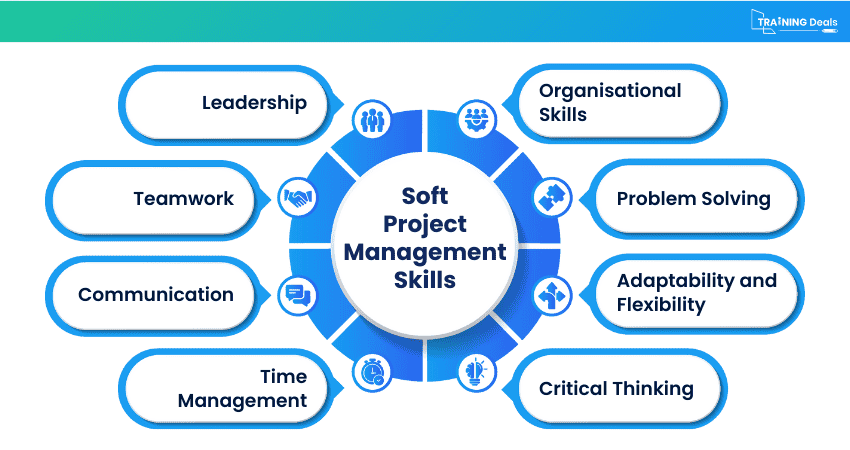
Soft Project Management Skills focus on communication, leadership, emotional intelligence, and collaboration. They help Project Managers build trust, motivate teams, and create a positive working environment. These skills are essential for managing people, resolving conflicts, and ensuring smooth coordination across stakeholders. Let’s explore the most important Soft Project Management Skills:
1) Leadership
Leadership involves guiding the project team towards shared goals while providing motivation and support. Great project leaders inspire confidence, set clear expectations and create an environment where team members feel empowered to perform at their best.
2) Teamwork
Teamwork is about encouraging trust and cooperation among project members. Strong teamwork ensures that individuals work effectively together, share responsibility and contribute their strengths to achieve project objectives.
3) Communication
Communication is the ability to share expectations and updates with stakeholders and team members clearly. Strong communication helps prevent misunderstandings and ensures transparency throughout the project lifecycle.
4) Time Management
Time Management involves planning, prioritising and allocating time to meet deadlines. Project Managers use this skill to balance workloads, manage competing priorities and ensure that milestones are achieved on schedule.
5) Organisational Skills
Organisational skills help Project Managers structure tasks, documentation and resources efficiently. Being organised ensures clarity, reduces confusion and supports smooth coordination across all project activities.
6) Problem Solving
Problem solving allows Project Managers to identify challenges, analyse root causes and implement practical solutions. This skill is essential for overcoming obstacles and keeping projects on track when unexpected issues arise.
7) Adaptability and Flexibility
Adaptability allows Project Managers to properly respond to change, shifting priorities or evolving requirements. Flexibility ensures that the projects remain aligned with goals despite uncertainty or changing circumstances.
8) Critical Thinking
Critical thinking involves evaluating information objectively and making informed decisions. Project Managers use this skill to assess risks, compare differing options and determine the most effective course of action.
9) Negotiation
Negotiation helps Project Managers reach mutually beneficial agreements with stakeholders, vendors, team members, etc. It supports managing expectations, resolving disagreements and balancing competing interests.
10) Conflict Resolution
Conflict resolution focuses on addressing disagreements in a constructive and fair manner. Effective resolution maintains positive working relationships and prevents conflict from disrupting project progress.
11) Delegation
Delegation involves assigning distinct tasks to the right people based on their skills and capacity. This skill ensures that the work is distributed effectively, so that it improves productivity and allows Project Managers to focus on strategic responsibilities.
12) Decision Making
Decision making is the ability to choose appropriate actions based on the available information. Strong decision making helps Project Managers maintain momentum and confidently guide the project forward.
Upgrade your project expertise with our range of PRINCE2® Courses - Register now!
Hard Project Management Skills
Hard Project Management Skills cover practical, measurable abilities such as scheduling, budgeting, risk management, and scope control. These skills focus on the technical aspects of planning, executing, and monitoring projects using structured methods and tools. They help ensure projects remain on track, within budget, and aligned with defined objectives. Let’s explore these skills in detail:
1) Project Scoping
Project scoping defines the boundaries, deliverables and objectives of a project. Clear scoping prevents misunderstandings and reduces the risk of scope creep. It ensures that all the stakeholders share a common understanding of what is included and excluded.
2) Project Planning
Project planning involves outlining tasks, resources, timelines and responsibilities. It provides a structured roadmap that guides execution and supports controlled delivery. Effective planning improves coordination among teams and helps them manage dependencies efficiently.
3) Project Roadmapping
Project roadmapping presents a high-level visual plan showing key milestones and timelines. It helps the stakeholders understand the project's progress and long-term direction. This clarity supports informed decision making and Expectation Management.
4) Writing a Project Brief
A project brief clearly documents the objectives, requirements, constraints and success criteria associated with the project. It serves as a reference point for alignment across the team. A well-written brief reduces ambiguity and supports consistent execution.
5) Hosting a Project Kickoff Meeting
Kickoff meetings are held to formally launch the project by aligning the stakeholders on goals, roles, timelines and expectations. They establish clarity and a shared understanding from the outset regarding the project.
6) Task Management
Task Management involves organising, assigning and tracking work items during a project lifecycle. It ensures unfailing accountability and helps teams stay focused on the priorities related to the project.
7) Mapping Your Project Timeline
Timeline mapping defines the task sequences, dependencies and deadlines needed for completing the project successfully. It supports realistic scheduling and progress monitoring to smooth the process.
Blend the Agile mindset with the discipline of PRINCE2® in our PRINCE2 Agile® Practitioner Course – Sign up now!
Technical Project Management Skills
Technical Project Management Skills relate to tools, methodologies, and systems that help Project Managers analyse data, manage resources, and integrate technology effectively. These skills support informed decision-making, efficient tracking, and accurate reporting throughout the project lifecycle. They also enable Managers to work confidently with software platforms and technical teams. Let’s explore these skills in detail: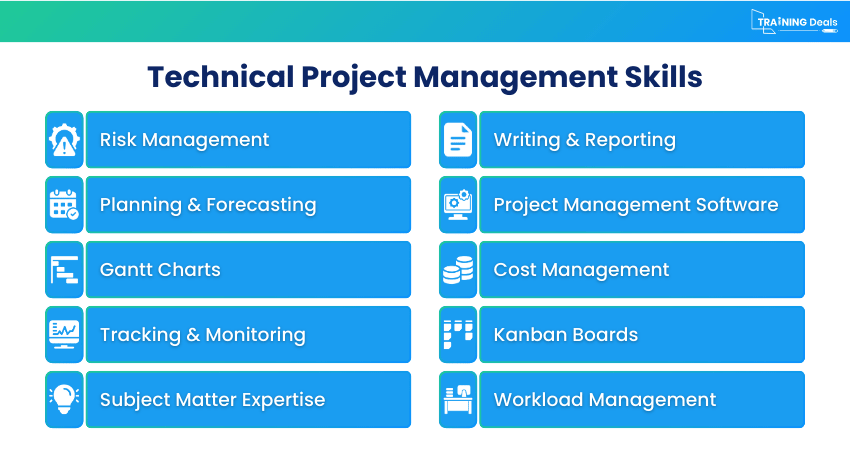
1) Risk Management
Risk Management prioritises identifying, evaluating and mitigating potential project threats. This skill helps reduce uncertainty and protect project outcomes. It enables teams to design contingency plans that keep the project moving even when unexpected challenges arise.
2) Planning and Forecasting
Planning and forecasting involve predicting future needs, timelines, and resource requirements. They help with proactive decision‑making and long‑term project control. Strong forecasting improves accuracy in budgeting, scheduling and workload allocation.
3) Gantt Charts
Gantt charts visually represent the project schedules, tasks and dependencies. They help teams understand timelines and track progress effectively. They also make it easier to adjust timelines when priorities shift or delays occur.
4) Tracking and Monitoring
Tracking and monitoring measure project performance against plans. This ensures issues are identified early and corrective action can be taken promptly. Consistent monitoring helps maintain alignment with project goals and stakeholder expectations.
5) Subject Matter Expertise
Subject Matter Expertise provides technical understanding relevant to the project domain. It supports informed decisions and effective collaboration with specialists. It also boosts credibility, thus allowing Project Managers to guide discussions with deeper insight.
6) Writing and Reporting
Writing and reporting involve documenting progress, risks, and outcomes clearly. Accurate reporting keeps stakeholders informed and supports transparency. Clear documentation also creates a reliable project record for future reference and audits.
7) Project Management Software
Project Management software helps plan, track and manage work digitally. These tools improve visibility, collaboration and efficiency. They also automate routine tasks, freeing time for strategic decision‑making.
8) Cost Management
Cost Management focuses on budgeting, tracking expenses and controlling financial resources. It ensures projects remain financially viable. Effective cost control prevents overspending and supports better financial forecasting.
9) Kanban Boards
Kanban boards visualise workflows and task status. They support continuous delivery and workload balance. They also help teams identify bottlenecks quickly and optimise workflow efficiency.
10) Workload Management
Workload Management ensures tasks are distributed evenly across the team. It prevents burnout and maintains sustainable productivity. Good workload planning boosts team morale and improves overall project delivery.
Lay the groundwork for Agile project success with PRINCE2 Agile® Foundation Training - Register now!
How to Improve Project Management Skills?
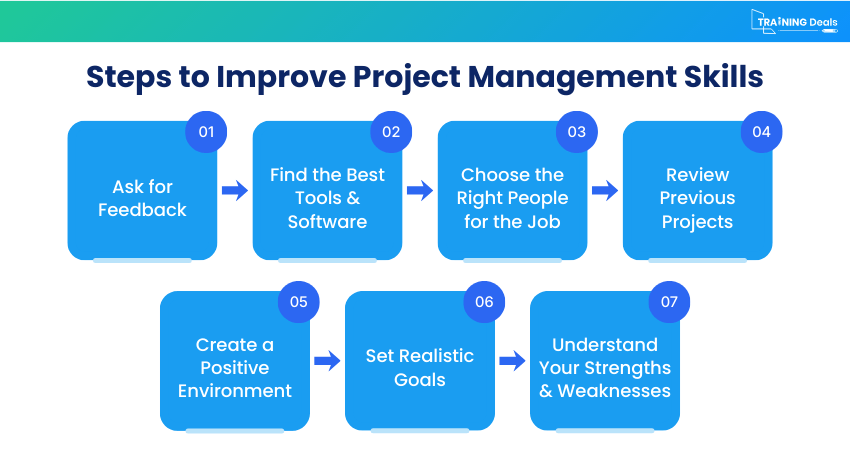
You can strengthen your core Project Management abilities through consistent practice and hands‑on experience. The following strategies can help you further advance your Project Management Skills:
1) Ask for Feedback
One of the fastest ways to identify improvement areas is to request feedback from your teammates. Ask for it periodically to track your progress over time. It’s also helpful to gather feedback immediately after completing a project, while every detail is still fresh for your team and stakeholders. You may collect feedback through formal documentation or dedicated review meetings.
2) Find the Best Tools and Software
A wide range of tools and organisational systems can simplify your work as a Project Manager. Depending on the nature of the project, you might prefer Cloud‑based Project Management platforms or straightforward daily checklists. Choose tools that help with documentation and collaboration across your team.
3) Choose the Right People for the Job
Good Team Management involves assigning roles strategically. Evaluate each team member's strengths and shortcomings before distributing responsibilities. Aligning people with tasks that match their capabilities allows them to perform at their best and contributes to the project’s success.
4) Review Previous Projects
Looking back at earlier projects is one of the best ways to avoid repeating mistakes. Analysing past missteps can help you improve future performance, while reviewing successful projects can inspire new solutions.
5) Create a Positive Environment
A healthy team environment encourages trust and open communication. For a project to thrive, team members must feel appreciated. Acknowledge their efforts when things are going well, and help boost morale during challenging moments.
6) Set Realistic Goals
Setting realistic goals helps ensure success for both you and your team. While ambition is valuable, unrealistic targets can overwhelm your team and hinder productivity. Communicate project goals clearly with clients and Managers to avoid misunderstandings or unmet expectations.
7) Understand Your Strengths and Weaknesses
Being aware of your strengths and limitations is the key to growth as a Project Manager. When you understand where you need support, you can seek help or develop strategies to improve. Acknowledging what you excel at builds confidence and enable you to deliver a stronger experience for your team.
Conclusion
Project Management Skills are the engine behind successful delivery in any industry. By mastering a balanced mix of leadership, planning and technical expertise, professionals can navigate any level of complexity with confidence. These skills empower you to drive collaboration, manage change and consistently transform ambitious ideas into measurable results across projects.
Lead the sprint, break the bottlenecks and become the Scrum Master every agile team dreams of. Sign up for our Scrum Master Certification now!
Search
- PRINCE2 vs APM: A Complete Guide to their Differences
- 10+ Project Management Tools to Boost Productivity in 2026
- What is Scrum? Agile Framework Explained
- What is Project Management? Phases, Approaches, and Benefits
- What is Agile Project Management? A Comprehensive Guide
- AI in Project Management: Benefits, Challenges, and Best Practices
- What is the Critical Path Method in Project Management? Explained
- What is Project Management Triangle? Key 3 Constraints Explained
- What are the Principles of Management? A Complete Overview
- ITIL Framework: Definition, Benefits and Implementation Explained
- What is Workflow Management? A Comprehensive Guide
- What is a Project Management Plan? Key Components and Benefits
- Why is Project Management Important? Top 12 Reasons & Tips
- Top 15 Project Management Methodologies You Should Know in 2026
- 15 Project Management Techniques Every Manager Should Use
- Project Timeline Explained: Simple Steps to Create Effective Plans
- How to Become a Project Manager: Skills, Steps, and Career Path
- Project Charter Explained: Components & How to Write It Effectively
- Program Manager vs Project Manager: A Complete Comparison Guide
- The 5 Project Management Phases Every Professional Should Know
- What is Risk Mitigation: Types, Steps, and Best Practices
No match found
Latest Blog
What is Risk Mitigation: Types, Steps, and Best Practices
June 27, 2026
The 5 Project Management Phases Every Professional Should Know
June 23, 2026
Program Manager vs Project Manager: A Complete Comparison Guide
June 23, 2026
Project Charter Explained: Components & How to Write It Effectively
June 23, 2026
FAQ
No FAQs available for this blog.
.svg)