.svg)


How to Become a Finance Manager: A Comprehensive Guide
Becoming a Finance Manager requires the right education, relevant work experience, and strong financial skills to effectively manage company finances. This role focuses on overseeing an organisation’s financial health by planning budgets, monitoring cash flow, analysing financial reports, and guiding strategic decisions.


Maria Thompson
Have you ever wondered who makes the big financial decisions behind a company’s growth and stability? From managing budgets to guiding investment strategies, it is the Finance Manager who plays a crucial role in shaping business success. If you are considering this career path, learning How to Become a Finance Manager is the first step towards it.
Whether you are just starting out or looking to grow in your finance career, the journey requires the right mix of education, experience, and practical skills. In this blog, you will learn about How to Become a Finance Manager, their roles and responsibilities, and more. Let’s begin to help you take clear steps towards achieving your career goals.
How to Become a Finance Manager?
Learning How to Become a Finance Manager involves a combination of education, practical experience, and continuous skill development. Let’s look at the steps that reflect a reliable career progression in the finance field below:
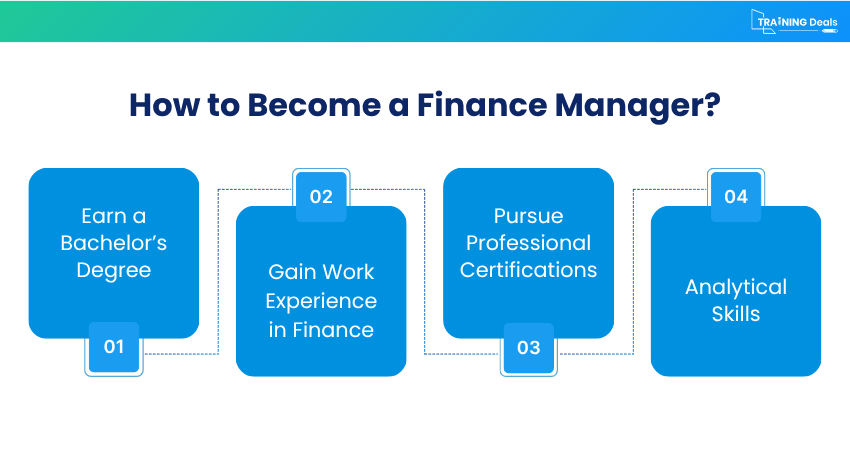
1) Earn a Bachelor’s Degree
Usually, most Finance Managers begin their finance careers with a bachelor’s degree in finance, accounting, or related discipline. This builds a strong foundation in financial principles, data analysis, and business operations, leading to a thorough understanding of organisational finances.

2) Gain Work Experience in Finance
Employers require several years of experience in finance-based roles before moving to a managerial position. Begin with entry-level roles, such as a financial analyst or accountant to build practical knowledge, improve analytical thinking, and develop an understanding of financial processes.
3) Pursue Professional Certifications
Professional certifications such as ACCA, ACA, and CIMA are commonly valued in the finance industry. While not always mandatory, they can enhance credibility, demonstrate expertise, and improve career advancement opportunities, especially for senior roles. Also, it helps professionals stay updated with industry standards and strengthen their competitive edge.
4) Analytical Skills
Finance Managers must have strong analytical and technical skills, including financial reporting, budgeting, forecasting, and risk management. Also, soft skills are equally important, such as communication, leadership, and decision-making, as the role involves coordination and supporting strategic business decisions.
Roles and Responsibilities of the Finance Manager
A Finance Manager plays a core role in developing the financial stability and long-term growth of an organisation. Let’s look at their key roles and responsibilities below:
1) Financial Planning and Forecasting: Finance Managers create budgets, financial forecasts, and long-term plans to guide business strategy. They are responsible for analysing financial data to help organisations make informed strategic decisions.
2) Financial Reporting and Compliance: They ensure accurate and timely preparation of financial statements while maintaining compliance with tax laws and internal policies. This helps build transparency and trust with stakeholders.
3) Cash Flow and Working Capital Management: Cash flow management is essential to keep the business running smoothly. Finance Managers monitor liquidity, control working capital, and ensure that the organisation can meet its financial obligations.
4) Cost Control and Profitability Analysis: They analyse revenue and expenses to identify cost-saving opportunities and improve profitability. This includes evaluating spending patterns and implementing strategies that protect long-term financial health.
5) Investment and Financial Decision-making: Finance Managers assess investment opportunities and capital allocation decisions. They ensure resources are used efficiently and contribute to the organisation’s financial growth.
6) Risk Management: Identifying and managing financial risks is a key responsibility. Finance Managers develop strategies to minimise risks related to market changes or operational uncertainties.
7) Leadership and Team Management: They lead and mentor finance teams, ensuring efficient operations across accounting functions such as payroll, invoicing, and reporting. Strong leadership helps maintain productivity and accuracy.
8) Strategic Advisory to Management: Finance Managers work closely with senior leadership, providing insights on pricing, cost reduction, and financial performance. Their analysis supports better business decisions and long-term planning.
Gain recognised credentials and accelerate your finance career today by joining the Certified Artificial Intelligence (AI) for Accountants Training.
Skills Required to Become a Finance Manager
To gain a deeper understanding of How to Become a Finance Manager, professionals must develop a balanced mix of technical expertise, analytical thinking, and strong leadership abilities. Let’s explore the core skills below:
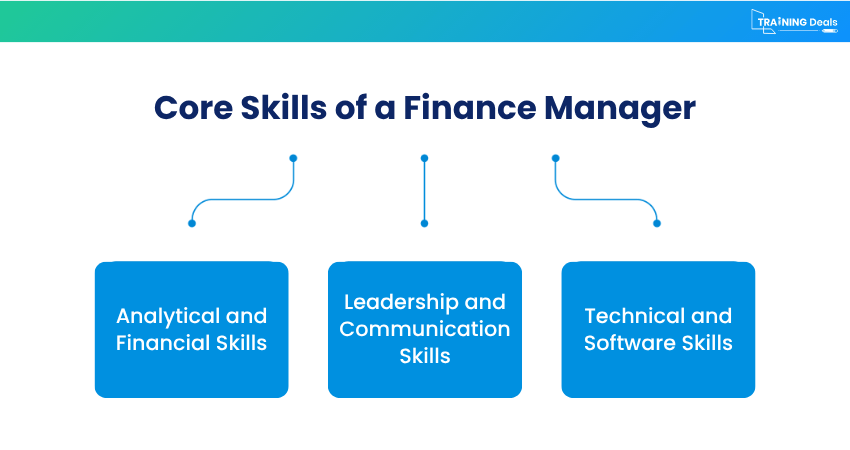
1) Analytical and Financial Skills
Finance Managers must have strong analytical skills to interpret financial data, budgets, and forecasts. A thorough understanding of financial planning, reporting, and economic principles helps them evaluate performance, identify trends, and make informed strategic decisions. They also use these insights to improve efficiency, control costs, and support overall business growth.
2) Leadership and Communication Skills
As this is a leadership role, Finance Managers are responsible for guiding teams and coordinating with different departments. They need to communicate financial insights clearly, delegate tasks effectively, and motivate team members to achieve organisational goals. Strong collaboration skills also help them align financial strategies with broader business objectives.
3) Technical and Software Skills
Finance Managers require proficiency in financial tools and software for managing data and reporting accurately. They should be skilled in spreadsheets, accounting systems, and financial management software for efficient analysis, forecasting, and compliance with financial regulations.
Conclusion
If you are exploring How to Become a Finance Manager, setting clear goals and staying consistent will help you progress and achieve long-term success. It is an impactful and lucrative career path that combines analytical expertise, strategic thinking, and leadership. By gaining the right education, building practical experience, and continuously developing your skills, you can create a solid career in finance.
Strengthen your financial expertise for leadership success with the Accounting Courses – Join now!
Search
Latest Blog
What is Risk Mitigation: Types, Steps, and Best Practices
June 27, 2026
The 5 Project Management Phases Every Professional Should Know
June 23, 2026
Program Manager vs Project Manager: A Complete Comparison Guide
June 23, 2026
Project Charter Explained: Components & How to Write It Effectively
June 23, 2026
FAQ
The average salary of a Finance Manager in the UK ranges from £43,000 to £66,000 per year. Those with advanced qualifications and strong expertise earn at the higher end, particularly in larger organisations. It is important to note that salaries vary based on experience, location, and industry.
Some common jobs leading to a Finance Manager role include Financial Analyst, Accountant, Senior Accountant, Controller, and Treasury Analyst. Through these jobs, professionals build expertise in budgeting, reporting, analysis, and financial planning.
The Chief Financial Officer (CFO) is higher than a Finance Manager in the organisational hierarchy. A CFO focuses on long-term financial strategy, investor relations, and advising the CEO. In contrast, a Finance Manager handles daily financial operations, budgeting, and compliance, usually reporting to the CFO.
.svg)