.svg)


What is Public Finance: Meaning, Objectives, and Components
Public Finance examines how governments raise revenue and spend funds through taxes, budgets, and debt to promote economic growth, stability, and welfare. Key aspects include taxation, budgeting, public spending, and Debt Management. It facilitates social welfare through mechanisms like social insurance and national health services.


James Smith
Have you ever wondered how governments fund roads, hospitals, schools and public services that people rely on every day? Behind these essential services lies a structured financial system that decides how money is raised, managed and spent for the greater benefit of society. This system is known as Public Finance, and it plays an important role in ensuring national resources are used responsibly.
Understanding this system helps explain how governments collect revenue, manage spending, and control debt. This blog explores the objectives, components, types and functions of Public Finance, showing how financial decisions support development, stability and public welfare. So read on!
What is Public Finance?
Public Finance refers to the management of a country’s revenue, expenditure, and debt by government and quasi-government institutions. It explains how governments collect money through taxes, investments and other sources and how they spend it on public services. These services include healthcare, infrastructure, salaries of government employees and technological development.
It operates at the central, state and local government levels. It examines how governments raise funds, prepare budgets, and allocate resources to meet public needs while supporting economic growth, stability, social welfare, national development, efficient resource allocation and improved public services.

Objectives of Public Finance
Public Finance manages government revenue and spending to support economic stability and public welfare. Through taxation and budgeting, governments meet public needs and drive development. The key objectives are outlined below:
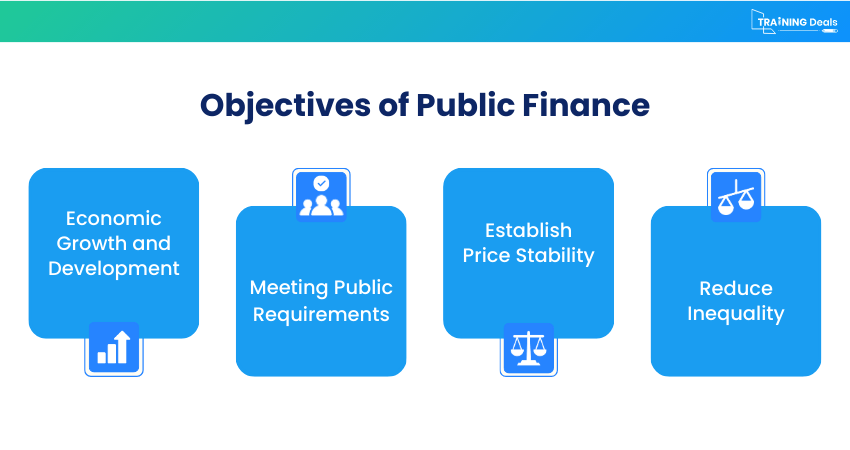
1) Economic Growth and Development
Public Finance supports economic growth by funding infrastructure, industries, technology, and development programmes. Government spending stimulates business activity, creates jobs, and increases productivity, contributing to long-term economic progress and prosperity.
2) Meeting Public Requirements
Public Finance ensures that governments allocate resources to meet essential public needs such as healthcare, education, housing, food supply, and infrastructure. Providing these services improves living standards and supports the social and economic development of a country.
3) Establish Price Stability
Public Finance helps control inflation and maintain price stability through government spending and taxation policies. Stable prices protect purchasing power, encourage investment, support economic confidence, and ensure sustainable growth in the national economy.
4) Reduce Inequality
Public Finance helps reduce income and social inequality through taxation policies and welfare programmes. Governments redistribute resources by supporting lower-income groups with subsidies, social benefits, and public services to create a more balanced and inclusive economy.
Key Components of Public Finance
Public Finance includes key components that help governments manage revenue and spending efficiently. The main components are explained below:
1) Budget
The government budget is a financial plan that outlines expected revenue and expenditures for a fiscal year. It helps allocate funds to sectors such as healthcare, education, infrastructure, and social welfare while maintaining financial discipline.
2) Expenditures
Government expenditure refers to money spent on public services and development activities. It includes funding for education, healthcare, infrastructure, defence, and welfare programmes to improve public services and support economic and social development.
3) Tax Collection
Tax collection is a major source of government revenue. Governments collect taxes from individuals and businesses through income tax, sales tax, property tax, and other charges. These funds are used to finance public services and development projects.
4) National Debt
National debt refers to the money borrowed by a government when its spending exceeds its revenue. Governments raise funds through bonds or loans to cover financial gaps and support development projects when necessary.
5) Deficit/Surplus
A budget deficit happens when government expenditure is higher than the revenue collected. A surplus occurs when revenue exceeds spending. Managing deficits and surpluses helps governments maintain financial balance and economic stability.
Learn practical Excel skills to streamline Accounting tasks and financial reporting through the Excel for Accounting Course – Join now!
Types of Public Finance
Public Finance is generally divided into several key categories that focus on different aspects of government Financial Management. The main types are explained below: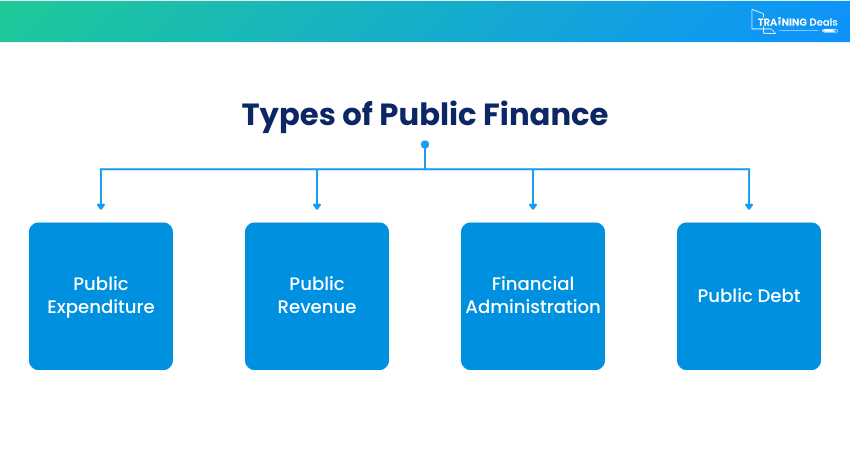
1) Public Expenditure
Public expenditure refers to government spending on public goods and services like infrastructure, healthcare, education, defence, and welfare programmes. These investments aim to improve living standards, support economic development, and provide essential services for citizens.
2) Public Revenue
Public revenue is the income collected by the government to fund its activities and services and support national development and public programmes. It mainly comes from taxes such as income tax, sales tax, and property tax, along with non-tax sources like fees, fines, and government service charges.
3) Financial Administration
Financial administration involves managing and controlling public funds through budgeting, financial planning, monitoring expenditures, and auditing government accounts. It ensures transparency, accountability, and efficient use of financial resources in government operations and policy implementation.
4) Public Debt
Public debt refers to the funds a government borrows when its expenditure exceeds revenue, helping meet financial requirements and support development goals. Governments borrow through bonds, loans, or other financial instruments to Finance Development projects and manage fiscal deficits responsibly.
Functions of Public Finance
Public Finance performs several key functions that help governments manage revenue, expenditure, and debt while supporting economic stability and social welfare. The main functions include:
1) Provision of Public Goods: Governments fund essential services such as infrastructure, education, healthcare, and defence to support national development and improve living standards.
2) Income Distribution: Public Finance helps reduce economic inequality through taxation policies, subsidies, and welfare programmes that support lower-income groups.
3) Economic Stabilisation: Governments use fiscal policies such as taxation and public spending to control inflation, support economic growth, and maintain overall economic stability.
Learn AI tools to automate Accounting tasks and improve financial insights through the Certified Artificial Intelligence (AI) for Accountants Training – Join now!
Career Opportunities in Public Finance
Public Finance offers career opportunities in Economics, Financial Analysis and government policy. These roles focus on managing public funds and analysing fiscal policies. Some key career opportunities are outlined below: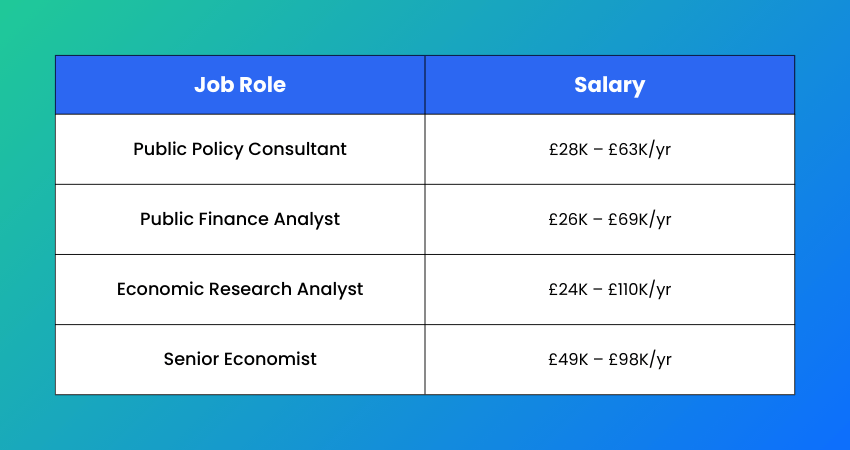
1) Public Policy Consultant
Public Policy Consultants advise governments and organisations on economic and financial policies. They analyse public programmes, evaluate policy outcomes, and recommend strategies that improve public spending, taxation policies, and overall economic performance.
2) Public Finance Analyst
Public Finance Analysts examine government budgets, financial reports, and economic data. Their role involves assessing public expenditure, forecasting financial trends, and helping policymakers make informed decisions about Fiscal Management.
3) Economic Research Analyst
Economic Research Analysts study economic trends, fiscal policies, and financial data. They conduct research that helps governments understand economic challenges and develop policies that support economic growth and financial stability.
4) Senior Economist
Senior Economists analyse national and global economic trends to guide financial and fiscal policies. They work with government institutions, research organisations, and financial bodies to provide strategic insights that support economic planning and development.
Public Finance vs Private Finance
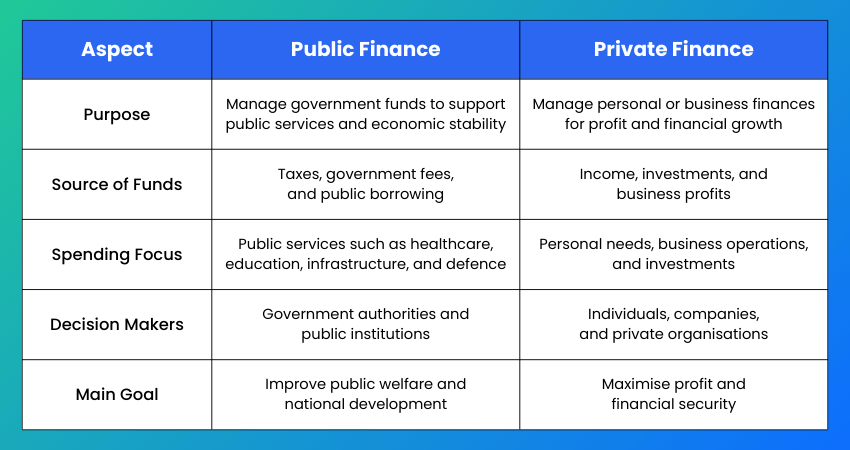
Public and private finance both involve managing money, but differ in purpose. Public Finance focuses on government spending for public welfare, while private finance manages money for individuals or businesses. The table below highlights the key differences:
Conclusion
Public Finance sits at the heart of every strong economy, shaping how governments fund services, support growth, and respond to public needs. When managed well, it drives stability, reduces inequality, and builds a stronger future, showing why it matters to every citizen, not just Economists.
Gain practical Accounting expertise to manage financial data accurately and confidently through the Accounting Courses – Join now!
Search
Latest Blog
What is Risk Mitigation: Types, Steps, and Best Practices
June 27, 2026
The 5 Project Management Phases Every Professional Should Know
June 23, 2026
Program Manager vs Project Manager: A Complete Comparison Guide
June 23, 2026
Project Charter Explained: Components & How to Write It Effectively
June 23, 2026
FAQ
No FAQs available for this blog.
.svg)