.svg)


What is Finance: Types, Functions, Importance, and Examples
Finance is the management of money and financial resources, including budgeting, saving, investing, lending, and planning to achieve personal or business goals. It helps to manage cash flow, support growth, reduce risks, and guide smart decisions, helping individuals and organisations to achieve long-term financial stability.


Maria Thompson
From paying bills to planning for future goals, money plays a central role in everyday life. Yet many people still wonder, What is Finance and why does it matter so much. Understanding Finance helps you manage your money wisely, make informed decisions, and stay prepared for both future opportunities and challenges.
When you clearly understand What is Finance, you begin to see how money flows, grows, and supports long-term financial success. In fact, global debt reached a record £263.30 trillion in 2025, showing how deeply finance shapes economies worldwide. In this blog, you will learn about Finance, how it works, its terms, types, and more. Let’s begin!
What is Finance?
Finance is the study and management of money. It explains how money is earned, saved, invested, borrowed, and spent by individuals, businesses, and governments. It helps people and organisations make informed decisions, plan for the future, and manage financial risks.
Also, Finance examines how money moves within an economy and how financial systems support growth and stability. By ensuring resources are allocated effectively, Finance helps improve efficiency and supports long-term financial success.

How Does Finance Work?
Finance works by helping individuals, businesses, and governments manage money and make informed financial decisions. Let’s look at it below:
1) Resource Allocation: Finance ensures money is distributed efficiently to meet needs, such as daily expenses, investments, or business operations.
2) Borrowing and Lending: It allows individuals and organisations to access funds through loans or credit, supporting growth and financial flexibility.
3) Investment Decisions: Finance helps decide where to invest money, such as in stocks, bonds, or property, to generate returns over time.
4) Risk Management: It identifies potential financial risks and helps create strategies to reduce or manage uncertainty.
5) Budgeting and Forecasting: Finance involves planning how money will be used and predicting future income and expenses to maintain control.
Essential Finance Terms
Understanding basic Finance terms helps you better manage money and make informed decisions. Here are some key terms below:
1) Asset: Anything of value owned by an individual or business, such as cash, property, or investments. It helps increase financial strength and can generate future income.
2) Liability: A financial obligation or debt that must be repaid, either in the short term or long term. Managing liabilities is important to avoid financial strain.
3) Equity: Ownership in an asset or business, often represented by shares or stock. It reflects the value remaining after liabilities are deducted.
4) Balance Sheet: It is a financial statement that shows a company’s assets and liabilities, helping determine its net worth. It provides a clear snapshot of the financial position at a given time.
5) Cash Flow: The movement of money in and out of a business or household over a period. A positive cash flow ensures smooth financial operations.
6) Liquidity: It refers to the ease with which an asset can be converted into cash without losing value. Higher liquidity means quicker access to funds when needed.
7) Profit: The amount of money left after all expenses have been deducted from income. It indicates financial performance and business success.
8) Compound Interest: Interest calculated on both the initial amount and the accumulated interest over time, leading to higher returns or costs.
Transform data into clear financial decisions by joining the Excel for Accounting Course today!
Different Types of Finance
Finance is commonly divided into a few main types that explain how money is managed in daily life, business activities, and government systems. These types make it easier to understand how Finance works in different situations. Let's look at them below:
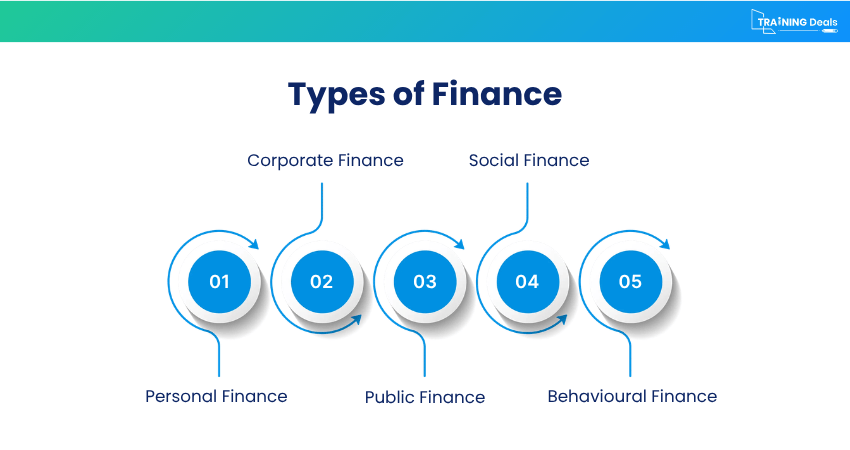
1) Personal Finance
Personal Finance is about managing money at an individual or household level. It includes everyday activities, such as budgeting, saving, borrowing, and planning for future goals. Also, it helps individuals build financial security and prepare for unexpected expenses.
2) Corporate Finance
Corporate Finance focuses on how businesses raise, manage, and use money. This includes funding operations, supporting growth, making investments, and handling debt or equity responsibly.
3) Public Finance
Public Finance deals with how governments manage revenue, spending, assets, and debt. It supports public services, such as education, healthcare, and infrastructure, while also affecting the wider economy.
4) Social Finance
Social finance refers to funding or investment that aims to create both financial value and positive social impact. It is linked with social enterprises, community development, and forms of finance that support wider social good.
5) Behavioural Finance
Behavioural Finance studies how emotions, biases, and psychological factors affect financial decisions. It helps explain why people do not always act rationally when saving, investing, or responding to market trends.
Key Functions of Finance
Finance focuses on managing money effectively to support stability, growth, and informed decision-making. Its key functions help individuals and organisations plan, allocate resources, and manage risks efficiently. Let’s look at them below:
1) Investment and Capital Allocation Management
This function focuses on deciding where money should be placed so it creates value over time. It helps ensure that funds are used wisely to support growth and future opportunities.
Key Areas:
a) Choosing where to invest money, such as in shares, projects, or long-term goals. These decisions help generate returns and create financial opportunities.
b) Allocating funds to areas that support growth and efficiency. Proper allocation ensures money is used in the most productive way.
c) Supporting business expansion through effective use of capital. This helps organisations grow, innovate, and remain competitive.
2) Budgeting and Financial Planning Process
This function involves organising income and expenses to maintain financial control. It helps individuals and organisations to plan ahead and stay prepared for future needs.
Key Areas:
a) Planning income and expenses to maintain financial control. It helps avoid overspending and ensures essential needs are covered.
b) Tracking spending and setting financial goals. This enables individuals and businesses to save and plan for future requirements.
c) Preparing for future expenses and uncertainties. Good planning reduces financial stress and improves stability.
3) Risk Management and Profit Maximisation
This function focuses on balancing potential risks with expected returns. It helps protect financial resources while aiming for growth and better outcomes.
Key Areas:
a) Identifying and assessing potential financial risks before making decisions. This helps reduce uncertainty and avoid major losses.
b) Taking steps to minimise risks while making informed choices. It ensures financial resources are protected.
c) Making decisions that aim to increase returns. This helps achieve growth while maintaining financial balance.
Step into the future of finance with AI-powered accounting by joining the Certified Artificial Intelligence (AI) for Accountants Training now!
Role and Importance of Finance in Daily Life and Business
Finance plays an important role in managing money, supporting growth, and ensuring stability in both personal life and business operations. Let’s look at its role and Importance in daily life and business below:

1) Budget Management: Finance helps plan and control daily expenses, ensuring money is spent wisely and costs are kept under control.
2) Wealth Building: Through saving and investing, Finance enables individuals and businesses to grow their wealth over time and prepare for future needs.
3) Financial Security: Proper financial planning helps protect assets and provides stability during emergencies or unexpected situations.
4) Informed Decision-making: Finance supports better choices by providing clear insights into spending, investing, and managing money effectively.
5) Business Growth and Expansion: Finance helps businesses raise funds, manage operations, and invest in opportunities that support growth and long-term success.
6) Achieving Long-term Goals: It allows individuals and organisations to plan ahead and work towards financial goals, such as expansion or major investments.
7) Investment Opportunities: Good financial planning opens opportunities to invest in assets that can generate returns and increase value over time.
8) Economic Stability: On a larger scale, Finance helps to maintain economic balance by supporting government spending, managing debt, and funding services.
9) Maximising the Value of Money: Finance ensures that money is used efficiently, helping individuals and businesses get the best possible outcomes from their resources.
Examples of Finance in Daily Life
Finance is part of everyday life. Simple actions like checking your balance before planning a weekend outing or deciding whether to cook at home instead of eating out reflect basic financial decision-making. Also, parents comparing school fees or setting aside money for future needs show how Finance supports planning and careful spending.
In many cases, Finance appears in small, routine choices. A student managing pocket money or a family planning a holiday within a budget are common examples. Even thinking twice before buying something on instalments helps avoid unnecessary debt. These everyday decisions show that Finance is simply about managing money wisely and staying in control.
Conclusion
Finance is an essential part of everyday life, shaping how we manage money, make decisions, and plan. Understanding What is Finance helps individuals and businesses use their resources wisely, reduce risks, and achieve long-term goals. From simple daily choices to major financial planning, it provides the structure needed to create a more secure and stable financial future.
Learn accounting the smart way and grow with confidence by joining the Accounting Courses now!
Search
Latest Blog
What is Risk Mitigation: Types, Steps, and Best Practices
June 27, 2026
The 5 Project Management Phases Every Professional Should Know
June 23, 2026
Program Manager vs Project Manager: A Complete Comparison Guide
June 23, 2026
Project Charter Explained: Components & How to Write It Effectively
June 23, 2026
FAQ
Finance was not founded by one person. It evolved from early credit systems in Mesopotamia around 3000 BCE. The Medici family advanced banking in the 14th century, while Eugene F. Fama is known as the father of modern finance for his work on market theory.
The main goal of Finance is to maximise value and ensure long-term financial stability. It focuses on managing resources, making smart investment decisions, and maintaining liquidity while controlling risks to support growth and financial success.
Finance and accounting both deal with money, but they focus on different things. Accounting records and reports past financial data, while Finance uses that data to plan investments, manage risks, and support future growth.
.svg)