


ITIL Framework: Definition, Benefits and Implementation Explained
ITIL Framework is a set of best practices that helps organisations manage IT services effectively, align them with business needs, and improve service quality. It provides guidance for delivering reliable, customer-focused services, while also supporting continual improvement and better operational decisions across the organisation.
James Smith
Have you ever been stuck waiting for an IT issue to be fixed while work piles up and deadlines get closer? Or faced system outages that slow down your team and frustrate customers? These problems are more common than many organisations admit. To address these challenges, the ITIL Framework brings structure, clarity, and consistency to IT service delivery.
In today’s digital environment, organisations need more than technology. They need a clear strategy to deliver value through IT. The ITIL Framework improves service quality and supports change. This blog explores what it is, its benefits, and how to implement it. Read on to learn more!
What is ITIL Framework?
The Information Technology Infrastructure Library (ITIL) Framework is a globally recognised set of best practices for IT Service Management (ITSM). It provides guidance on how organisations design, deliver, manage, and continually improve IT services to meet business and customer needs.
The ITIL Framework focuses on creating value through reliable, efficient, and customer-centred IT services. Rather than strict rules, it offers flexible guidance that organisations can adapt to improve service quality, reduce risks, and align IT operations with business goals.

How to Implement the ITIL Framework Step by Step?
Implementing the ITIL Framework requires a structured and practical approach. Organisations should introduce ITIL gradually, making sure each step aligns with business needs and improves service delivery. The following steps provide a clear path to successful implementation:
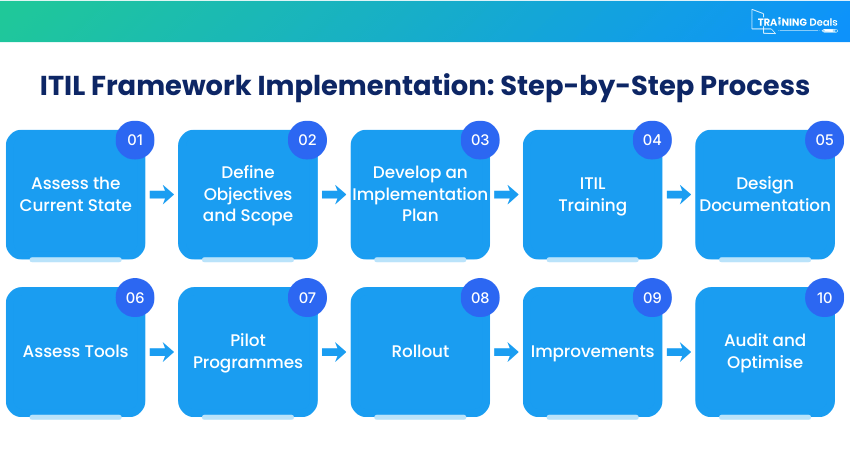
1: Assess the Current State
Begin by understanding how your IT services currently operate before adopting the ITIL Framework. Speak with stakeholders and teams to learn about their expectations and challenges. Compare existing processes with ITIL best practices to identify gaps, inefficiencies, or areas that require improvement.
2: Define Objectives and Scope
Decide what you want to achieve with the ITIL Framework, such as improving service quality, increasing efficiency, or enhancing customer satisfaction. Then define the scope of implementation by choosing which services, departments, or ITIL practices to focus on first. Clear objectives help guide decisions and measure implementation success.
3: Develop an Implementation Plan
Create a clear roadmap for implementing the ITIL Framework, outlining tasks, timelines, responsibilities, and resources. A structured plan helps teams stay organised and ensures implementation aligns with business priorities. It also helps manage risks and maintain accountability throughout the process.
4: ITIL Training
Provide training to help employees understand the ITIL Framework, its concepts, processes, and their specific roles. Proper training builds confidence, ensures consistency, and supports smooth adoption of new practices. Well-trained teams are more likely to apply practices correctly and consistently.
5: Design Documentation
Document processes, procedures, and responsibilities based on ITIL Framework guidelines. Clear documentation helps standardise operations, improve communication, and ensure everyone follows the same structured approach. It also creates a reliable reference for maintaining consistency over time.
6: Assess Tools
Evaluate the tools and technologies required to support ITIL Framework practices. This may include service desk software, monitoring tools, or automation platforms that improve efficiency and service management. Choosing the right tools ensures smoother workflows and better performance tracking.
7: Pilot Programmes
Test selected ITIL Framework practices in a small area of the organisation before full implementation. Pilot programmes help identify issues, gather feedback, and refine processes in a controlled environment. This reduces risk and improves readiness for wider adoption across the organisation.
8: Rollout
After successful testing, implement ITIL Framework practices across the organisation step by step. Monitor progress closely, address challenges quickly, and support teams through the transition for smooth adoption and stability. Effective communication is essential to ensure organisation-wide alignment.
9: Improvements
Regularly review how well the ITIL Framework is working and gather feedback to identify opportunities for improvement. Continual improvement ensures services remain efficient and aligned with changing business needs. Ongoing evaluation helps maintain long-term service performance and value delivery.
10: Audit and Optimise
Evaluate the effectiveness of the ITIL Framework through regular audits. Use insights from these reviews to refine processes, optimise performance, and support organisational goals. Regular optimisation ensures the framework continues to deliver measurable results.
ITIL Framework Compatibility with Other Standards
The ITIL Framework works alongside recognised standards and methodologies rather than replacing them. It provides practical guidance to improve IT services and support effective management. This compatibility is reflected in how ITIL integrates with key standards and approaches below:
ITIL and ISO 20000
ISO 20000 is an International Standard for IT Service Management. The ITIL Framework supports this standard by offering best practice guidance on how to design, deliver, and improve IT services effectively. Many organisations use ITIL practices to help meet ISO 20000 requirements and maintain consistent service quality.
ITIL and Agile / DevOps
Agile and DevOps focus on speed, collaboration, and continuous delivery. The ITIL Framework complements these approaches by providing structure, governance, and service stability. Together, they help organisations deliver services quickly while maintaining control, reliability, and quality across the entire service lifecycle.
ITIL and IT Governance
IT governance frameworks emphasise strategic oversight, risk management, and accountability. The ITIL Framework supports governance by providing structured processes and operational practices for managing IT services effectively. This ensures that IT activities remain aligned with business objectives and regulatory requirements.
The Benefits of the ITIL Framework
The ITIL Framework provides structured guidance to manage IT services and deliver business value. It helps organisations improve service quality, adapt to change, and enhance customer experience. Below are the key benefits of adopting ITIL:
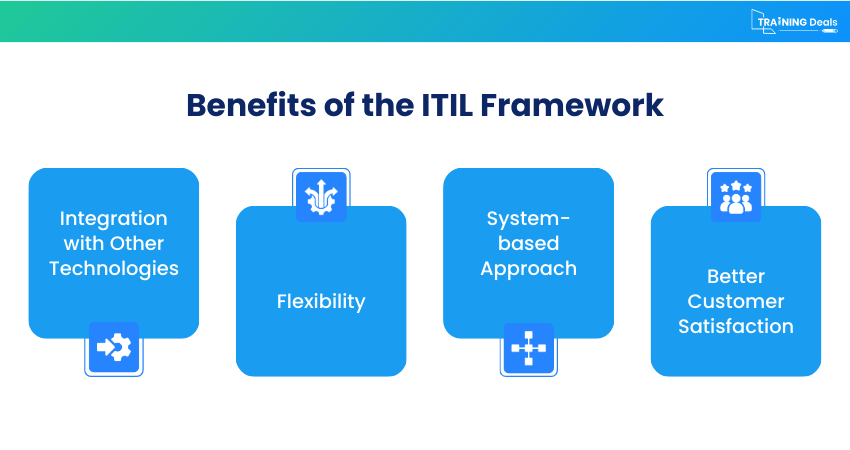
1) Integration with Other Technologies
ITIL supports modern technologies and working methods, making it easier for organisations to combine traditional IT Service Management with newer approaches such as cloud computing, automation, Agile, and DevOps. This integration helps organisations maintain control while adopting innovation, ensuring services remain reliable and high-quality.
2) Flexibility
The ITIL Framework is flexible and can be tailored to suit different organisational needs. Businesses can implement the entire framework or adopt selected practices that best support their goals based on their priorities and resources. This adaptability makes ITIL suitable for organisations of all sizes and industries.
3) System-based Approach
The ITIL Framework takes a holistic view of Service Management by treating IT operations as an interconnected system. It provides structured guidance across the full-service lifecycle, from planning and design to delivery and continual improvement. This system-based approach improves coordination, efficiency, and overall service performance.
4) Better Customer Satisfaction
The ITIL Framework focuses on delivering value and meeting user needs. By improving service reliability, responsiveness, and consistency, organisations can provide a better customer experience across all service interactions. This leads to higher satisfaction, stronger trust, and long-term business relationships.
Common Challenges and Solutions in the ITIL Framework
Although the ITIL Framework helps organisations improve IT Service Management, implementation can present challenges, especially without proper planning, involvement, or long-term management. Some of the most common challenges are outlined below:
1) Lack of Team and Business Involvement
One of the most common challenges is limited involvement from employees and business stakeholders. When ITIL processes are introduced without input from the people who use or depend on them, they may not reflect real operational needs. This can lead to resistance, low engagement, and difficulty in adopting new practices across the organisation.
Solution: Involve technical teams and business stakeholders from the start. Encourage collaboration, gather feedback, and ensure processes support real business objectives.
2) Insufficient Planning
Implementing ITIL without a clear strategy or structured roadmap can create confusion and delays. Organisations may struggle with unclear roles, poor coordination, and unrealistic expectations. Without proper planning, implementation efforts can become inconsistent and difficult to manage.
Solution: Develop a structured implementation plan with defined goals, responsibilities, timelines, and success measures. A phased approach helps manage change more effectively.
3) Ignoring the Company's Needs and Compliance
Some organisations attempt to apply ITIL practices exactly as defined without adapting them to their specific environment. This approach may create unnecessary complexity and fail to address organisational priorities or regulatory requirements. As a result, implementation may not deliver meaningful value.
Solution: Tailor ITIL practices to the organisation’s size, industry, and compliance obligations. Focus on what delivers real value rather than implementing everything at once.
4) Forgetting Operations and Continual Improvement
Another challenge is treating ITIL implementation as a one-time activity rather than an ongoing process. When organisations focus only on initial setup and overlook long-term operations, processes may become outdated or ineffective. Without continuous monitoring and review, Service Management practices may lose relevance over time.
Solution: Establish regular performance reviews, track service metrics, and embed continual improvement into daily operations. ITIL should be treated as an ongoing journey, not a one-time implementation.
Conclusion
The ITIL Framework empowers organisations to deliver reliable, efficient, and value-driven IT services in a constantly evolving digital landscape. By combining structured practices with flexibility and continual improvement, it helps businesses stay competitive, responsive, and customer-focused while building stronger, more resilient Service Management capabilities for long-term success.
Transform your IT career with industry-recognised ITIL® Certification that drives service excellence and operational success.
Search
- PRINCE2 vs APM: A Complete Guide to their Differences
- 10+ Project Management Tools to Boost Productivity in 2026
- What is Scrum? Agile Framework Explained
- What is Project Management? Phases, Approaches, and Benefits
- What is Agile Project Management? A Comprehensive Guide
- What are Project Management Skills: Top 25+ Skills You Must Know
- AI in Project Management: Benefits, Challenges, and Best Practices
- What is the Critical Path Method in Project Management? Explained
- What is Project Management Triangle? Key 3 Constraints Explained
- What are the Principles of Management? A Complete Overview
No match found
Latest Blog
What are the Principles of Management? A Complete Overview
February 20, 2026
ITIL Framework: Definition, Benefits and Implementation Explained
February 20, 2026
AI in Project Management: Benefits, Challenges, and Best Practices
February 07, 2026
What is the Critical Path Method in Project Management? Explained
February 12, 2026